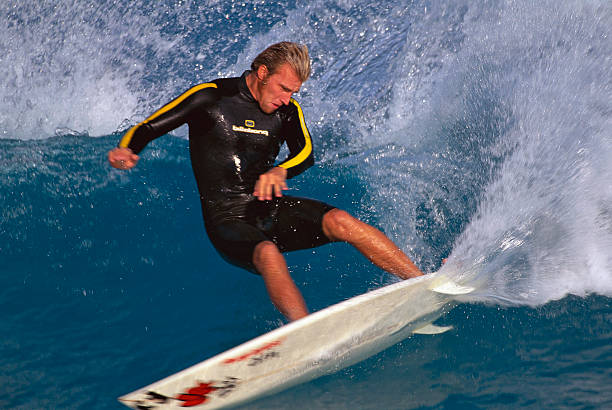
Let’s get one thing straight from the get-go: surfing is not just a sport. Calling it that is like calling breathing a hobby. It’s a fundamental part of the equation. For those of us who live it, surfing is the central pulse of a whole culture, a lifestyle that seeps into every corner of your existence. It’s about the salt in your hair, the wax under your fingernails, and the permanent chase for that next perfect glide. This is the surfing life, and it goes way beyond standing on a board.
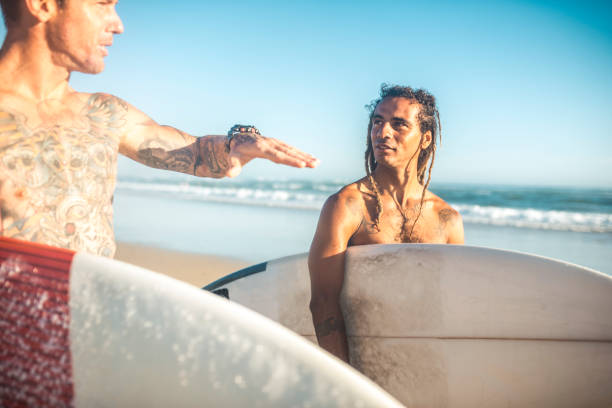
Think about it. The sport part is the act itself—the pop-up, the bottom turn, the cutback, the stoke of a clean barrel. That’s the highlight reel. But the culture is everything that happens in between sessions. It’s the pre-dawn alarm in the pitch black, fumbling with your wetsuit in a cold parking lot with your crew. It’s the silent communion of watching the horizon at first light, reading the sets, understanding the language of the ocean. It’s the shared nod with a stranger in the lineup who just got a good one, a silent respect that needs no words. That’s the real fabric of our world.
This culture is built on a deep history, from the ancient Polynesians who rode waves on heavy wooden planks as a sacred act, to the Dogtown and Z-Boys rebellion that brought it to the concrete jungle, to the modern high-performance revolution. We carry that with us. It’s in the terminology we use—calling a wave “firing” or a close-out “dumping,” knowing the difference between a thruster and a single fin, and understanding that “kook” isn’t an insult if you’re learning, but a way of life to avoid. The language binds us, a shorthand for the initiated.
And then there’s the chase. The true surfer’s heart is nomadic, forever looking at wind charts and swell models. The lifestyle is intrinsically tied to surf travel, to chasing that endless summer around the globe. It’s the pilgrimage to a remote Indonesian reef break, the road trip down the Baja coast with boards strapped to the roof, or simply scoring an uncrowded dawn patrol at your local on a good swell. It’s about the journey as much as the destination, the stories collected in lineups from Jeffreys Bay to Pipeline to a secret spot you’ll never name. The gear isn’t just equipment; it’s your trusted partner in that chase—the right board for the conditions, a reliable wetsuit that keeps you in the water longer, the fin set that gives you that extra drive.
But the surfing life isn’t all saltwater and rainbows. It teaches respect—for the ocean’s raw power, for the locals who guard their breaks, and for the environment that gives us these playgrounds. You learn patience waiting for waves, humility when the ocean puts you in your place, and a profound connection to the natural world. Your schedule revolves around tides and swells, your friendships are forged in the water, and your mindset shifts. Problems seem smaller after a session; the world makes more sense with a view from the lineup.
So yeah, you can call it a sport if you want. But for those who live it, surfing is the framework. It’s the history we respect, the technique we obsess over, the language we speak, the travel we crave, and the daily rhythm we choose. It’s a culture of stoke, resilience, and pure connection. It’s not something we do; it’s who we are. Now, if you’ll excuse me, the tide’s coming in.