Pop-Up Perfection: The Art of Getting to Your Feet

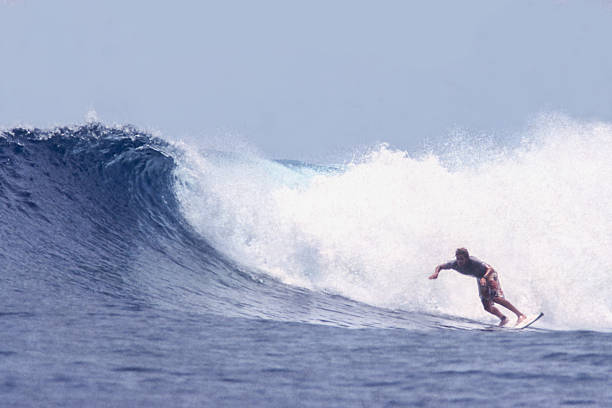
Let’s cut straight to the chase. In surfing, everything hinges on the pop-up. That single, fluid motion from lying prone to standing tall is the gateway to every turn, cutback, and barrel that follows. Mess this up, and you’re just a passenger on the wave. Nail it, and you’re in the driver’s seat, ready to carve your own line. This isn’t about fancy tricks; it’s about foundational power. It’s the difference between a kook struggling in the whitewater and a surfer setting a line for the shoulder.

Think of it as the most critical take-off in surfing. You’re not just standing up; you’re launching into a dynamic, moving environment. The mechanics are simple, but executing them under pressure—with the lip pitching behind you and the reef or sand below—is where the art lies. It starts on dry land. Practice on your living room floor until the motion is muscle memory. Position your hands flat on the board, directly under your chest. Your back is arched, head up, eyes forward—you’re a coiled spring, not a limp noodle.

When the wave lifts you, it’s go-time. This isn’t a slow, thoughtful push-up. It’s an explosive, single-action snap. In one motion, you push your upper body up while simultaneously swinging your back foot underneath you, planting it flat on the deck. Don’t place it too far forward or back; aim for the center of the board, perpendicular to the stringer. This is your anchor. Your front foot then follows in a smooth arc, landing somewhere between your hands, which are now coming off the deck. The key? Your back foot hits first. Always. This stabilizes the board instantly. A common kook move is bringing both feet up at once or leading with the front foot, which sends the nose diving or has you wobbling like a newborn giraffe.

Your stance is everything once you’re up. You want a low center of gravity, knees bent, back straight. Your feet should be roughly shoulder-width apart, angled slightly across the board—this is your natural surfing stance, regular or goofy. Your arms aren’t for balance; they’re for steering and flow. Point where you want to go. Look down the line, not at your feet. Your body will follow your gaze. This initial stance sets your rail and dictates your first bottom turn. Get it wrong, and you’ll either pearl straight into the drink or slide out the back because you’re too stiff.

The pop-up’s perfection is judged by its efficiency and adaptability. On a fat, mushy day, you might have time for a slightly more drawn-out, casual stand. But when it’s pumping overhead and hollow, your pop-up needs to be a lightning-fast, committed thrust. There’s no second-guessing. You explode up and immediately engage your rail, projecting your weight forward to match the speed of the wave. It’s this connection between the pop-up and the first turn that separates the weekend warrior from the true surfer.

So, forget the advanced maneuvers for a minute. Go back to the basics. Drill that pop-up on the beach until it’s second nature. Because out in the lineup, when that set wave you’ve been waiting for finally swings your way, you won’t have time to think. You’ll just react. And a perfect, no-nonsense pop-up is the only thing that gets you out of the turbulence and onto the open face, ready to chase down that endless summer feeling, one flawless take-off at a time.
Related Posts

Live Surf Cams

Surfline Live is a 24/7 glimpse into the world’s surf.

This stream moves through Surfline's global camera network, showing spots where it’s daylight and rated Fair or better.

What's The Deal With...?

Surf Technique Deep Dive

Why are reef breaks such a big deal?

Reef breaks create some of the world’s most perfect and powerful waves. The coral or rock bottom shapes the swell into consistent, clean lines. They offer incredible rides but come with serious consequences—a bad fall can mean more than just a wipeout. Knowing the tide is crucial, as a rising or falling tide can completely change the wave. Always check with locals about hidden dangers. The reward? Unforgettable sessions in crystal-clear water.

What’s “getting caught inside” and how do I avoid it?

Getting caught inside means you’re stuck in the impact zone when a big set starts unloading. It’s exhausting and dangerous. To avoid it, never turn your back on the horizon. After catching a wave, quickly assess if a set is lining up outside. If it is, paddle hard to get over the shoulder or straight back out, rather than sitting in the whitewater. Awareness is everything—stay frosty out there.

What’s the connection between a bottom turn and generating speed?

It’s the primary accelerator, man! A powerful bottom turn converts the gravitational speed from your drop into projected speed across the wave face. By compressing and then extending your legs while engaging the rail, you’re essentially pumping the wave. A good, solid turn off the bottom loads the board like a spring, unleashing energy that propels you down the line and up into your next section. No good bottom turn = no speed = a lame ride.

Surf Icons & Heroes

What’s key equipment for surfing like John John?

You gotta have a board that can handle both deep carves and explosive launches. Think a good-performance shortboard with solid rocker to get up and over the lip cleanly. Traction is everything, so a solid pad set-up for those in-air adjustments. Most importantly, it’s about matching your stick to the waves you’re actually surfing. John John’s boards are dialed for North Shore power—trying that on a weak beachbreak won’t get you the same pop, brah.

How is he involved in the surf community today?

Tomson remains a massive influence, not as a competitor, but as a mentor and storyteller. He speaks at events, shares his “Code” with stoked grommets, and advocates for ocean conservation. He’s a respected voice who connects surfing’s soulful past to its present, always emphasizing respect for the ocean and each other. You’ll find him sharing stories, inspiring the next generation, and occasionally still getting shacked at his home breaks, living the ethos he preaches.

What big waves has Bethany Hamilton surfed?

Bethany has absolutely charged some of the planet’s heaviest slabs. She’s a regular in the punishing surf of Pipeline on Oahu’s North Shore, taking on those thick, hollow barrels. She’s also tackled Teahupo’o in Tahiti, one of the world’s most powerful and dangerous waves. Charging these spots requires next-level wave knowledge, commitment, and guts—all things she has in spades. It proves her talent isn’t defined by an arm, but by her fearless heart and deep respect for the ocean’s raw power.