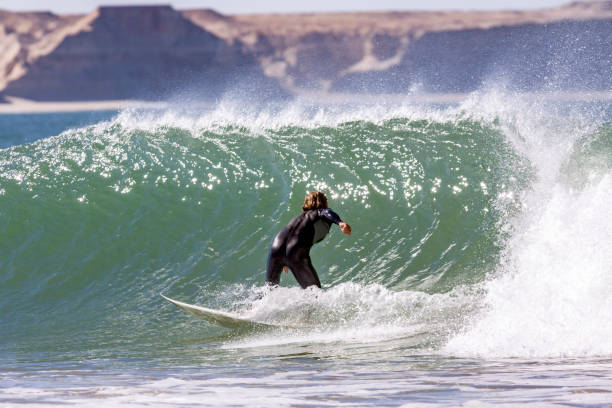
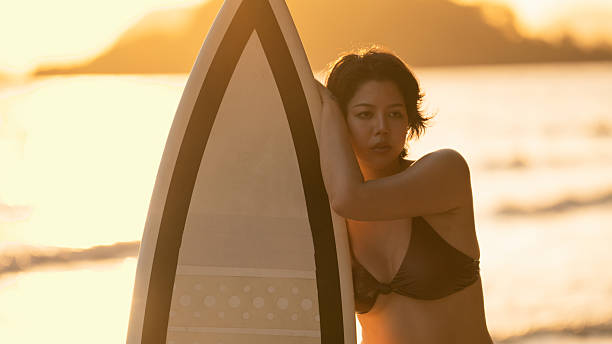
You paddle out past the shorebreak, through that first line of whitewater that always wants to knock you off your board, and you finally slide into the lineup. The surface goes glassy for a minute, flat as a lake in the trough between swells. Your heart is still pumping from the paddle, beads of salt water dripping off the tip of your nose, and you sit there scanning the horizon. Nothing. Just a flat, shimmering line where the sky meets the sea. You feel that little tickle of impatience in your chest. This is the lull, the quiet moment between the sets, and learning to love this pause is the first secret to truly reading the ocean.
The wave set is the ocean’s heartbeat, a pulsing rhythm of energy that has traveled thousands of miles across the open Pacific before it finally stands up and throws its arms around your local break. Every wave that touches the sand was born from a storm somewhere far out there, a distant wind that pushed energy across the deep blue. That energy moves in groups, like a pack of wolves traveling together. You get your lulls, where maybe one rogue wave rolls through every few minutes, and then you get your sets, those beautiful sequences of two, three, or sometimes four waves that march in with increasing size, one right on the tail of the last.
The real trick to wave set awareness is not just seeing the sets, it’s feeling them coming. A good surfer watches the horizon, but a great surfer watches the ocean’s surface for the subtle signs. You look for a dark line, a shadow that seems to deepen the color of the water out on the outside. That dark line is the face of the incoming swell, a pulse of water that is just beginning to feel the bottom contour as it rises from the deep. When you see that dark line, you know a set is approaching. But there’s more. You watch the birds, the pelicans and seagulls that sit on the water. When a set is coming, the birds on the outside will lift off, because even they know that the water is about to become an unstable platform. You watch the wind. A sudden calm on the water, a slick skin that looks like oil, often precedes the biggest waves of the set because the rising swell kills the surface chop before it breaks.
Then there is the ultimate tell, the one that separates the kooks from the core crew: you watch the outside rocks. If there is a reef or a rock shelf that is barely submerged, the set waves will show themselves there first, puffing up and feathering white before they ever reach the main peak. It’s like the ocean sends a postcard from the outside, giving you a ten-second warning to get into position. When you see that puff of white on the outer reef, you know you have to paddle. Not chill. Not casual. You have to go, hard and deep.
But here is where the stoke of awareness really kicks in. You have to know where you sit in relation to the peak. If you are too far inside, the set will jack up right on your head and you will spend the next minute getting tumbled through the washing machine. If you are too far outside, you will watch the perfect wave reel down the line without you. That is the dance. You paddle out during the lull, using the quiet time to glue yourself to the right spot. You watch the horizon, you feel the water lift beneath you like a slow elevator ride as the first wave of the set approaches, and then you make your move. You angle your board, you paddle with everything you have, and you feel that moment when the wave catches the fin and suddenly the whole world tilts.
Reading the sets is about patience. It is about trusting the rhythm. The ocean never stops, it just breathes. When you are sitting there in the lull, looking at a flat horizon, do not let the boredom get to you. That flatness is not emptiness, it is the silence before the drumbeat. The next set is out there, marching toward you. The waves you catch will be the best ones of the day only if you understand the timing, the gap between the sets, the lull that is your chance to breathe, to reset, to paddle to the perfect apex before the ocean delivers its next gift. You do not fight the rhythm, you ride it. You learn to read the dark lines, the lifting birds, the puff of white on the outer reef. You learn that the wave is not just the ride, it is the whole cycle, the paddle, the wait, the surge, the drop. That is the endless summer, right there in the pulse.