Alright, so you’re out there, salt on your skin, watching the horizon. The sets are rolling in and your buddy starts yelling about it being “bowly” and “hollow.“ You just nod, but inside you’re thinking, “What’s he even talking about?“ Knowing the lingo isn’t about being cool; it’s about painting the picture, sharing the stoke, and knowing exactly what you’re about to paddle into. This is your no-nonsense breakdown of the terms we use to describe the waves that get us out of bed before dawn.
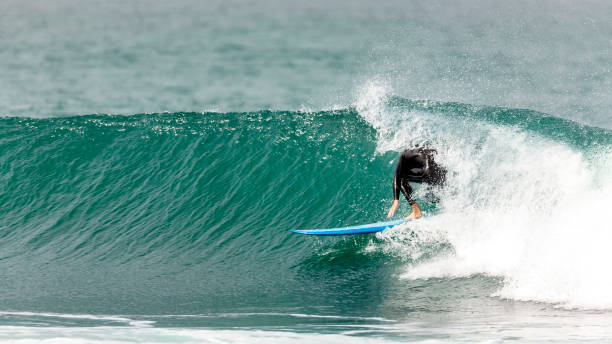
Let’s start with the basics of shape. A wall is exactly what it sounds like—a long, steep, and mostly vertical face that offers a fast, down-the-line ride. It’s a canvas for big carves. A bowl is where the wave seems to wrap around itself, creating a curved section that often jacks up and gets extra steep, perfect for a tight, powerful turn in the pocket. When a wave is hollow, that’s the golden ticket. It means the lip is throwing out far over the face, creating that tube, cavern, or barrel we all dream about. The more hollow, the deeper the pit.
Now, talking about that tube leads us to the holy grail of descriptions. A barrel is the ride inside the hollow part of the wave. It’s getting shacked, pitted, or tubed. If it’s a really thick, heavy wave throwing a massive lip over you, that’s a drainer—it’s like the ocean is draining all the water out from under you in a terrifyingly beautiful way. A close-out is the opposite dream. That’s when the whole wave breaks at once, from peak to shoulder, leaving no open face to ride. It’s a bummer.
The way a wave breaks is another chapter. A crumbling or mushy wave is soft and slow, perfect for longboards or learning. A peeling wave is the ideal: it breaks cleanly and evenly along its length, allowing for a long, smooth ride. When it’s sectioning, parts of the wave are breaking ahead of you, forcing you to either speed through the section or hit the lip to get over it. Make it through and you’ve made the section. A double-up is when two wave faces converge and combine into one super thick, powerful peak that jacks up suddenly. These can be incredibly heavy and often produce the best barrels.
We’ve gotta talk about size, but forget just feet and meters. A wave is just a wave. A set wave is the biggest one in the arriving group, the one you wait for. Overhead means the wave is taller than you. Double overhead? That’s twice your height and getting into serious territory. When it’s triple overhead or logo-to-the-sky, you’re looking at waves where a surfer at the bottom is looking up at the lip that’s next to their buddy’s logo on their board at the top. That’s heavy. Epic, gnarly, critical, and firing are the all-purpose adjectives we throw down when it’s all coming together—perfect shape, perfect size, perfect day.
Finally, there’s the character. A clean wave has smooth, organized faces without wind chop. Glassy is even better, when the ocean is like a mirror. Choppy or blown out means the wind has ruined it, creating bumpy, rough faces. A rogue wave is that one random, much bigger set that comes out of nowhere to clean everyone up. And maxing out is when the swell is so big the spot can’t handle it, turning it into a chaotic, unsurfable mess.
So next time you’re scanning the lineup or recounting the session, you’ve got the words. It’s about more than slang; it’s the shared language of the sea, describing the moving mountains we chase. Use it right, and you’re not just talking—you’re telling the story. Now go check the cams. It might be firing.