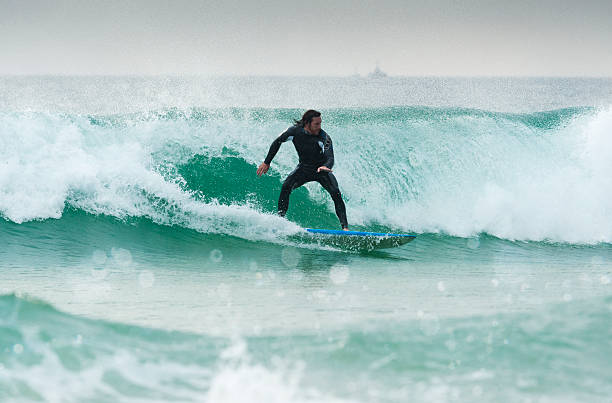
Alright, let’s cut through the froth and get down to brass tacks. If you’re chasing that dreamy, glassy session or trying to figure out why your local is a blown-out mess, you gotta understand the wind. It’s the invisible shaper, the ultimate wave dictator. The whole game boils down to two simple terms: offshore and onshore. Knowing the difference isn’t just surf theory; it’s the key to scoring good waves and avoiding frustration.
First up, the holy grail: offshore wind. Picture this. You’re paddling out, the sun’s coming up, and you feel a steady breeze gently pushing against your back, coming from the land out towards the ocean. That’s offshore, mate. This is the magic. When those swells roll in, the offshore wind hits them head-on, holding the face up, slowing down the lip from pitching too early, and creating that smooth, groomed, and often hollow canvas we all dream about. The wind literally blows the spray back off the top of the wave, giving it that iconic “smoking” or “feathering” look. It makes waves stand up taller, cleaner, and more predictable. For a surfer, an offshore wind means longer, more critical rides, cleaner barrels, and the ability to really set your line and rip. It’s the condition you see in all the dreamy surf clips. When the forecast says “light offshore,“ you set your alarm. No questions asked.
Now, flip the script. Onshore wind is when the breeze is coming from the ocean, pushing directly onto the land. You feel it in your face as you look out to sea. This is the party crasher. Instead of grooming the swell, an onshore wind mushes it up. It hits the back of the waves, pushing the lip down prematurely, creating a bumpy, choppy, and disorganized surface. Waves become fat, close out quickly, and lack any real shape or power. We call this “victory at sea” conditions—it’s all whitewater and chop. Sure, you can still go for a splash about, and beginners might not mind the softer, broken waves, but for anyone looking to actually surf with style and power, a strong onshore is a real buzzkill. It turns a perfect point break into a sloppy mess and can make beach breaks utterly unsurfable.
But here’s the nuance, the local knowledge that separates the kooks from the crew. It’s not always black and white. A light onshore can sometimes help a fat, sluggish swell actually stand up a bit at certain beach breaks. And a howling, gale-force offshore can be too much of a good thing, holding waves up so hard they become impossibly hollow and sucky, or even blowing you off the lip as you try to take off. It’s about the balance.
The real savvy comes from understanding the daily wind patterns of your spot—the diurnal shift. Mornings are often blessed with lighter winds or offshore conditions as the land is cooler than the sea. As the sun heats the land, the air rises and pulls in the wind from the ocean, creating that dreaded afternoon onshore slog. That’s why dawn patrol is a religion. You’re not just beating the crowds; you’re beating the wind switch.
So next time you’re checking the cams or staring at the horizon, don’t just look at the swell size. Check the wind arrow. Is it blowing offshore, grooming the lines to perfection? Or is it onshore, turning your session into a washing machine? This bit of knowledge is fundamental. It dictates where you go, when you paddle out, and ultimately, whether you’re strolling back up the beach with a grin or shaking your head. Know the wind, score the waves. It’s that simple.