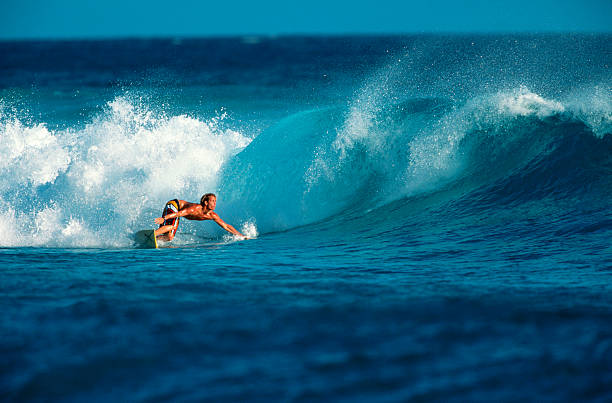
Let’s talk about the one piece of gear you never want to learn about the hard way: the surfboard leash. It’s not the most glamorous part of your quiver, but it’s arguably the most critical. Think of it as your direct, no-nonsense connection to your board—a lifeline that keeps you in the game, protects others in the water, and saves you from a brutal swim of shame back to the beach. In the endless pursuit of stoke, the humble leash is a non-negotiable essential.
Back in the day, before the leg rope was invented, surfing was a different beast. Guys were taking off on big, heavy single-fins with no tether. Wipeout on a solid day? Your board becomes a ten-foot projectile, a danger to anyone down the line, and you’re left diving under waves and swimming for what feels like forever to retrieve it. The invention of the leash in the early 70s was a total game-changer. It allowed surfers to push limits, take more risks, and spend more time actually riding waves instead of exhausting themselves swimming. It revolutionized safety in a crowded lineup. Suddenly, your board wasn’t a runaway train; it was just a short pull away.
But a leash isn’t just a piece of urethane cord you tie on and forget. Choosing the right one matters, and it’s all about matching it to your craft and conditions. The golden rule? Your leash should generally be about the same length as your board. A six-foot thruster needs a six-foot leash. This gives you enough slack to move but not so much that it gets tangled around your legs or creates dangerous drag. For bigger guns or when you’re charging heavy surf, you step up to a thicker, stronger cord—think 7mm or bigger—to handle the increased pull of a larger volume board and more powerful waves. Paddling out on a log? A longer, 10-foot leash is standard, allowing you to walk to the nose without getting tugged back.
The components are simple but vital. At one end, you’ve got the velcro cuff that straps securely around your back ankle (or front foot if you’re a goofyfoot). A solid, double-swivel system at both ends is key. This allows the cord to rotate freely and prevents the dreaded kinking and tangling that can lead to a snap. The cord itself is a marvel of stretchy urethane, designed to absorb the sudden shock of your board getting pulled by a wave, rather than just jerking you violently or breaking.
Now, let’s keep it real. A leash is a safety device, not a guarantee. The most important piece of equipment is still your own judgment and swimming ability. You should never rely on your leash to hold in massive, pounding surf—that’s how you get dragged underwater with extra force. And every surfer knows the leash law: if it does snap, you’re responsible for your runaway board. That’s why the occasional check is crucial. Look for wear, thin spots, or fraying near the swivels, and make sure the velcro hasn’t lost its grip from salt and sun.
In the end, a good leash is about respect. Respect for your own energy, so you can catch more waves. Respect for the crew in the water with you, by keeping your board under control. And respect for the ocean’s power, by having a direct, reliable link to your flotation. It’s a simple tool, but it’s the cord that ties the whole modern surfing experience together. So next time you’re waxing up, give your leash a once-over. That unassuming piece of gear is what keeps you connected, safe, and ready for the next set. Don’t leave the beach without it being dialed.