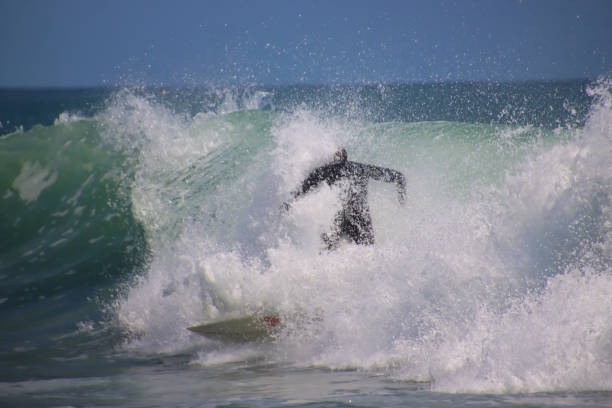
There is a moment every surfer knows. It comes the first time you paddle out on a new board, the foam still sharp on the rails, the resin smell barely faded. You sit there, floating in the lineup, and you feel it. That board has a personality. It either talks to you or it doesn’t. And when it doesn’t, you start wondering who shaped it. Because in the surfing world, the builder matters as much as the board itself. That is where the name Al Merrick enters the conversation like a quiet elder stepping into a crowded room. He doesn’t need to shout. His boards do the talking.
Al Merrick is the mind behind Channel Islands Surfboards, a brand that has been setting the standard for performance shortboarding since the late 1970s. But to call Channel Islands just a brand is like calling Pipeline just a beach. It’s deeper than that. Merrick is a true board builder, a shaper who learned the craft by hand, by eye, by the feel of foam under a planer. He didn’t come from a business school. He came from the water. He started shaping in his garage in Santa Barbara, California, back when the sport was transitioning from the longboard era into the twin-fin revolution. He watched Kelly Slater win his first world title riding a Channel Islands board. He shaped for Tom Curren, for Lisa Andersen, for a whole generation of surfers who demanded nothing less than perfection. And he delivered.
The thing about Merrick’s boards is that they have a distinct feel. They are not just production models stamped out by a machine. Every single board that leaves the Channel Islands factory goes through a shaping bay where real hands guide the foam. Merrick pioneered the use of computer shaping technology early on, but he never let the machine replace the human eye. He used the robot to refine the rockers, the foils, the rail shapes, but he always kept the final touch himself or with his team of master shapers. That balance between technology and tradition is what makes his boards so reliable. You know a Channel Islands board is going to paddle well, hold in a steep face, and release when you need it. It is a tool built for serious surfing.
But what really sets Merrick apart is his willingness to evolve. He was there when the modern thruster setup blew up in the early 1980s. He shaped the boards that Tom Curren rode to dominate the world tour. He watched the sport shift back toward wider, more forgiving templates in the 1990s and adapted again. When the love for alternative fin setups came back around, Merrick was shaping quads and twin fins that had the same drive and control as his thrusters. He doesn’t chase trends. He studies them, then he shapes his own version that works for real surfers. That is the mark of a true craftsman.
These days, the surfboard market is flooded with options. You can walk into any shop and see stacks of boards from big-name labels. But the brands that last are the ones built by people who actually understand the ocean. Al Merrick understands it because he lives near it. He still watches the waves. He still talks to the surfers who ride his boards. He takes the feedback from guys charging Cloudbreak and Teahupo’o and uses it to tweak the next model. That connection between the shaper and the wave is what makes a board feel alive. You can’t get that from a catalog.
For the surfer looking to step up their game, choosing a board from a true builder like Merrick is not just about buying a product. It is about respecting the craft. It is about understanding that the best equipment in the world is built by people who have saltwater in their veins. Channel Islands boards are not cheap. They are not supposed to be. You are paying for decades of knowledge, for hundreds of thousands of hours spent in a shaping bay, for the legacy of a man who shaped the boards that shaped modern surfing.
When you paddle out on a Channel Islands Rocket Wide or a Pro Model, you are riding the result of a lifelong obsession. The rocker is right. The rails are crisp. The bottom contour pulls you into the pocket and spits you out on the shoulder with speed you didn’t know you had. That is not luck. That is Al Merrick.
In the endless search for the perfect wave, the board builder remains the unsung hero. They are the ones who turn a slab of foam into a magic carpet. They are the ones who understand that surfing is not just a sport. It is a relationship between the surfer, the water, and the piece of art underneath your feet. Al Merrick has been in that relationship for over forty years. And he is still shaping.
So next time you look down at your board, think about whose hands touched it. Think about the dust in the shaping bay, the smell of resin, the late nights working on a template that will never be perfect but gets closer every time. That is the soul of surfing. And Al Merrick is still carving it.