Your Quiver: The Real Deal on Surf Gear and Brands

Let’s cut through the foam. Your gear isn’t just stuff; it’s your connection to the ocean, your passport to the lineup, and sometimes, the difference between a session you remember and one you’d rather forget. Choosing it shouldn’t be about hype, but about what gets you sliding across a face with a grin plastered on your mug. So, let’s talk real about the tools of the trade.

It all starts with the stick. The board is your soul vehicle, and the brands that shape them are the modern-day alchemists. You’ve got your heritage giants like Channel Islands and Firewire, names that have been under the feet of champs and everyday chargers for decades. They’re the benchmark, the reliable go-tos. Then you’ve got the high-performance innovators, like JS and DHD, pushing design boundaries for that extra snap and drive. But don’t sleep on the local shaper in that dusty lot near your break. That’s where the magic often happens—a custom board, shaped for your weight, your local waves, your style. That relationship is core to the culture.

But a board is useless without the right rubber. A good wetsuit is a non-negotiable. It’s your second skin, your personal heater. Rip Curl’s Flashbomb set the standard for quick-drying warmth, while O’Neill’s Psychoflex and Patagonia’s Yulex are heavy hitters in the durability and eco-game. The key? Fit is everything. A suit that flushes is a miserable suit. Try ’em on, move around, and don’t be afraid to go for the seam-taped, liquid-sealed models if you’re in real chill water. For warmer days, a solid rashguard from Billabong or Quiksilver does the job, keeping the sun and wax rash at bay.

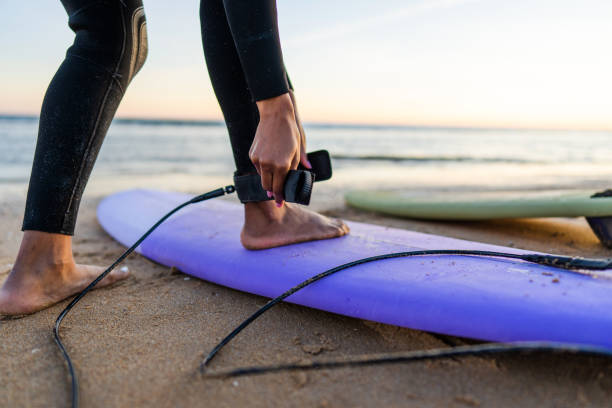
Now, let’s talk about the small stuff, the details that make a session smooth. Your FCS or Futures fins are your steering and acceleration. Swap a set and your board feels totally new. A single fin for soul carves, a thruster for all-around performance, quads for down-the-line speed. A good leash from Creatures of Leisure or Dakine isn’t just a string; it’s a safety line that keeps your board from becoming a hull missile. And your wax? Don’t overthink it. Cool, cold, tropical—just match it to your water temp. Sticky Bumps gets the job done, every time.

For the trek, you need a solid bag. A day bag from Vans or Nike SB holds your essentials: key, phone, sandals, maybe a post-surf brew. But for the real missions, the chasing-the-sun pilgrimages, a heavy-duty travel bag from Pro-Lite or DB is worth its weight in gold. Padded, lockable, and tough enough to survive baggage handlers—it’s the coffin that gets your baby to the promised land.

At the end of the day, brands come and go with the trends. What matters is function. Does it work? Does it last? Does it feel right? The best gear is the gear you forget you’re wearing because it just lets you surf. It’s not about the logo on your chest; it’s about the salt on your skin and the view from the shoulder. So, do your research, support your local shaper when you can, and invest in the pieces that keep you in the water longer. Because that’s the whole point, isn’t it? More waves, less hassle. Now go get suited up.
Related Posts

Live Surf Cams

Surfline Live is a 24/7 glimpse into the world’s surf.

This stream moves through Surfline's global camera network, showing spots where it’s daylight and rated Fair or better.

What's The Deal With...?

Surf Gear Essentials

What’s the purpose of the rail saver?

That padded section where the leash string connects to your board’s plug is the rail saver, and it’s crucial. It protects your board’s delicate rails and tail from getting gashed by the cord during violent snaps or when the board is tumbling in the whitewater. It also reduces stress on the leash string itself, preventing premature snapping. Always make sure the rail saver is in good condition and properly positioned against your board’s edge.

Why do I even need a wetsuit, bro?

A wetsuit keeps you in the water longer by trapping a thin layer of water that your body heats up, acting as a thermal barrier. It’s not just about cold—it provides protection from sun, wind, and reef rash. Think of it as your second skin that lets you chase swells from chilly dawn patrols to cooler tropical evenings. Without one, you’d be shivering back on the beach while your buddies are still getting shacked.

How often should I replace my leash?

Inspect your leash regularly for any signs of wear, like brittle urethane, deep nicks in the cord, or fraying near the Velcro or rail saver. Sun, salt, and sand are brutal on gear. A good rule of thumb is to replace it at least once a season if you surf frequently, and immediately if you see any damage. Don’t wait for it to fail in a critical moment—a snapped leash can ruin your session and put others at risk.

Surf Lingo & Slang

How do I choose the right board for a reef vs. beach break?

For a punchy, hollow reef, you often want more board under you—a step-up or good-wave shortboard with extra paddle power and hold to get in early and handle the speed. For a softer, crumbly beach break, you can go with a more forgiving, wider, and maybe slightly thicker board to help generate speed in weaker sections. It’s about matching the tool to the wave’s power. Always error on the side of caution at a reef; you want confidence paddling into those set waves.

What’s the first trick I should try to learn after popping up?

After you’ve got your pop-up dialed, the next move to stomp is trimming down the line. This isn’t a fancy trick, but it’s everything. It means angling your board along the open face of the wave, finding that sweet spot where speed and flow connect. Master this feeling of riding the green wave, not just straight toward the beach. It builds your wave sense and balance for every maneuver that comes next. Think of it as learning to carve on a skateboard before you attempt a kickflip.

What’s the secret to a proper cutback?

The cutback is your reset button. You use it to get back to the power source—the curl. As you race down the line, you’ll eventually hit the shoulder. Look back at the foam ball, shift your weight to your back foot, and use your head and shoulders to whip the board around in a smooth, arcing turn. The goal is to reconnect with the critical section of the wave. A stylish, powerful cutback is a thing of beauty and a fundamental skill for linking your ride together.