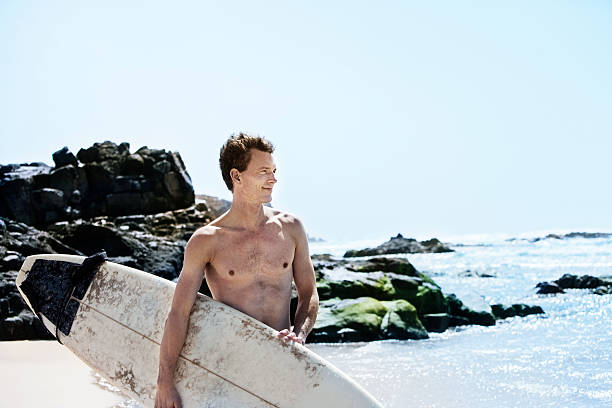
Picture this: it’s the late 1960s. The vibe in the lineup is mellow, but the surfing is, well, kinda slow. Everyone’s riding these big, beautiful, but cumbersome logs—heavy single-fin longboards that were great for nose-riding but felt like driving a bus when you wanted to carve. Then, almost overnight, the entire sport got turned on its head. Welcome to the Shortboard Revolution, the most radical shift in surfing’s entire story. This wasn’t just a tweak; it was a full-blown paradigm shift that changed how we ride waves, what we ride on, and what was even possible in the water.
The seeds were planted by a few key visionaries who were hungry for something more. Guys like Bob McTavish, George Greenough, and Nat Young started asking “what if?“ What if a board was shorter, lighter, and had more curve? Inspired by Greenough’s ultra-maneuverable kneeboards and their deep, flexy fins, McTavish and Young started hacking down longboards. They introduced the “V-bottom” hull, pulling in the tails and adding multiple fins to create boards that could pivot on a dime. The 1968 World Contest at Puerto Rico was the coming-out party. Nat Young, on his 9’4” “Sam” board (still long by today’s standards but a rocket ship then), didn’t just win; he surfed in a completely new way—driving through turns with speed and aggression that left the traditional style in the dust. The cat was out of the bag.
The following years were pure, unadulterated experimentation—the “Era of Sleds.“ Shapers went nuts. Boards shrunk fast, sometimes down to comically short lengths under 5 feet. The single fin was joined by twins, and then in 1980, Simon Anderson dropped the ultimate game-changer: the thruster. Three fins? It was the magic formula. The thruster gave surfers insane drive and hold, merging the speed of a twin with the pivot of a single. Suddenly, you could attack the lip with power, generate speed in flat sections, and truly surf the entire wave face, not just cruise along it. The shortboard, now with its tri-fin setup, had found its perfect form.
The impact was total. Wave riding exploded into new dimensions. The new gear demanded a new approach—lower, more compact stances, quicker footwork, and a focus on dynamic, vertical surfing. The old-school soul arch was replaced by the explosive top-turn. Surfing moved from the nose to the tail, from trim to thrust. This new performance standard birthed the modern professional tour and icons like Tom Curren, whose fluid, powerful arcs showed the world the art form this revolution had unlocked.
But let’s keep it real—the revolution had its casualties. The longboard was nearly driven to extinction, seen as a relic by the hot-blooded shortboard crews. The mellow, trim-based style of the 60s was, for a time, totally uncool. It took decades for longboarding to make its respectful comeback as a legitimate art, not just the old way.
So, next time you paddle out on your 6-foot something thruster, tip your hat to the late ‘60s. That shortboard revolution wasn’t just about making boards smaller. It was about unlocking potential. It handed surfers the keys to the wave’s whole playground—the pocket, the lip, the barrel. It made surfing faster, more critical, and infinitely more expressive. It’s the reason we talk about “ripping” instead of just riding. That shift in thinking and design is the direct line to every aerial, every deep barrel, and every carving turn you see today. The revolution wasn’t televised; it was glassed, finned, and ridden straight into the heart of modern surfing.