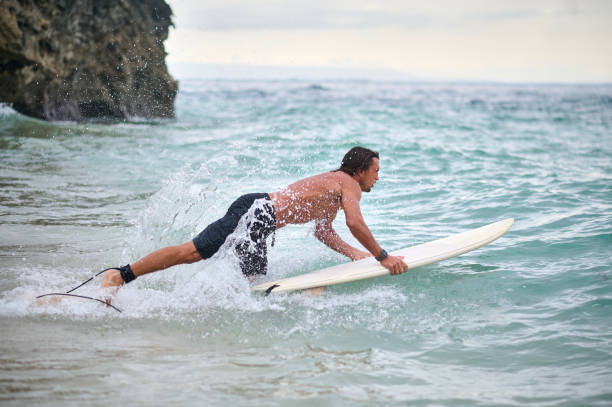
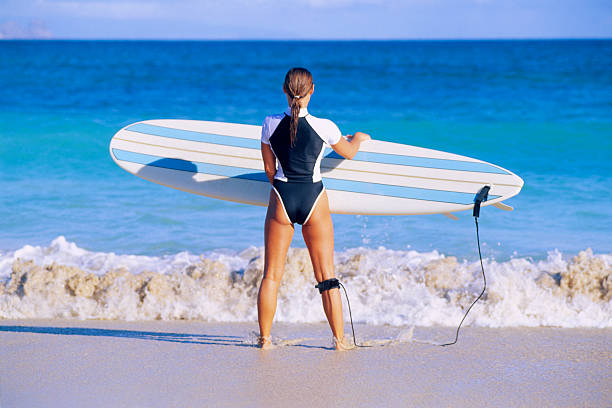
The story of the surfboard is the story of surfing itself. It’s a tale of innovation driven by a simple, timeless desire: to ride waves better, faster, and with more style. From the ancient, revered olo boards of Hawaiian royalty to the feather-light, computer-designed rockets of today, every shift in shape and material has opened up new doors on the wave. This isn’t just about gear; it’s about how the tool transformed the art.
It all started in the wood. For centuries, surfers rode massive, solid planks carved from local trees like koa, wiliwili, and redwood. These were serious logs—some olo boards stretched over 15 feet and weighed 150 pounds. They were incredibly difficult to handle, reserved for the ali’i (chiefs), and were more about straight-line glide than any hot-dogging. The more common alaia boards were shorter and thinner, but still, surfing was a test of strength. You were wrestling the ocean as much as riding it. This era was the pure, raw root of it all.
The modern revolution kicked off in the early 1900s with guys like Duke Kahanamoku and Tom Blake. Blake, a true waterman, looked at those heavy redwood planks and saw room for improvement. He started drilling holes and sealing the boards to create the first hollow boards, making them lighter and more manageable. But the real game-changer was the late 1940s and 50s, when guys like Bob Simmons and later, Hobie Alter and Dave Sweet, began messing with new materials. They swapped wood for foam and fiberglass. This was the big bang. Suddenly, shapers weren’t just carvers; they were sculptors. They could experiment with rocker, rails, and fins without needing a forestry permit. The Malibu chip, or “pig” board, with its single fin and rounded nose, became the standard. It offered pivot and control, birthing the classic noseriding style of the longboard era.
Then came the shortboard revolution in the late 60s and 70s. Surfers like Bob McTavish and George Greenough looked at the long, cumbersome logs and thought, “There’s got to be a more dynamic way.“ Inspired by Greenough’s flexible kneeboarding spoons, they started hacking feet off their boards. The result was the “shortboard”: lighter, with a pulled-in nose, a pintail, and multiple fins for drive. This wasn’t about walking to the nose; this was about digging a rail deep into the pocket, throwing spray, and attacking the wave vertically. Surfing went from a graceful glide to a radical, performance-driven sport almost overnight. The twin-fin, then the thruster (three-fin) setup invented by Simon Anderson in the early 80s, cemented this new paradigm. The thruster gave surfers insane drive and stability, allowing for the powerful, carving turns and aerial launches that define modern high-performance surfing.
Today, the evolution hasn’t stopped; it’s just gotten more specialized. You’ve got your high-performance shortboards, often shaped with computer precision and using epoxy resins and carbon stringers for insane pop. But you’ve also got the full-circle revival of the log—modern longboards that blend classic lines with new tech for smooth, soulful glides. In between lies a whole quiver: fish shapes for small, mushy days, grovelers for weak surf, step-up guns for charging big, heavy waves. The modern surfer doesn’t have one board; they have a tool for every mood the ocean throws at them.
From the sacred olo to the epoxy potato chip, each iteration of the surfboard has been a response to a simple question: “How can I get more stoke out of this wave?“ The board is the ultimate interface between surfer and sea, and its evolution is a direct line to the soul of the sport. It’s about the endless pursuit of that perfect, fluid dance on moving water.