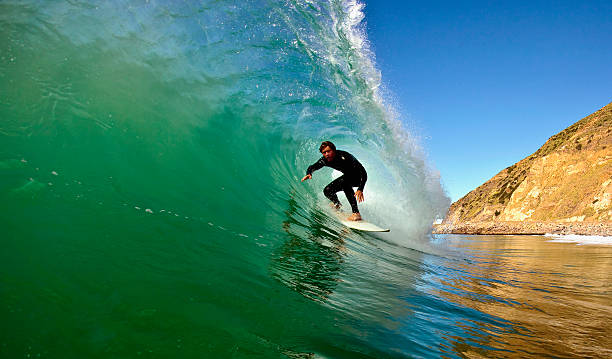
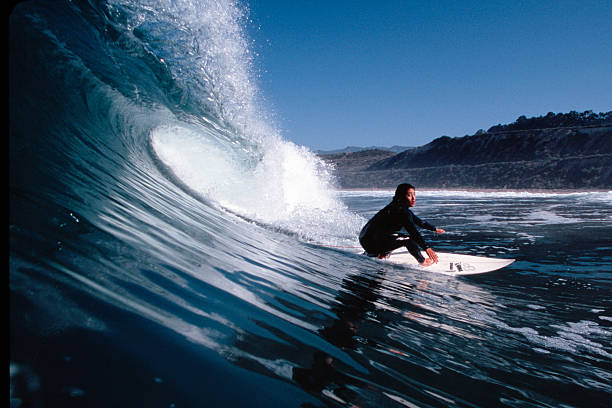
Before the foam, before the glass, before the leash even crossed a single shaper’s mind, there was a different kind of stoke. We’re talking way back, ancient roots, when the only thing between a waterman and a perfect peeling wave was a slab of wood shaped by hand and blessed by the spirit of the ocean. Most folks think the story of the surfboard starts with heavy redwood planks and the big ol’ olo boards of Hawaiian royalty, and that’s true enough. But the real soul of surfing, the rawest connection between human and wave, lies in a much simpler, more radical piece of history: the alaia.
The alaia was the commoner’s board, the everyday tool of the ancient Hawaiian surfer. While the chiefs rode the massive, eighteen-foot olo boards that were heavy as logs and required a serious prayer session just to get to the water, the alaia was lean, mean, and built for pure speed. It was a board without a leash, without any rocker to speak of, and without a single ounce of foam. It was a solid plank of wiliwili or koa wood, usually between six and ten feet long, with a thin profile that looked more like a long, curved bellyboard than anything you’d see at a modern point break. But don’t let the simplicity fool you. The alaia was a revolutionary piece of equipment that demanded a skill level most modern surfers can barely imagine.
The session with an alaia was not a casual affair. You didn’t just paddle out and sit in the lineup. You swam, you dove, you earned every single wave. The board had almost no buoyancy compared to today’s foam rockets. You’d catch a wave by paddling hard, but the real magic happened when you shifted your weight. The alaia had such a thin, flat profile that once you dropped in, you couldn’t just stand there like a passenger. You had to lean, you had to slide, you had to ride the rail. The turn wasn’t a carve; it was a ruddering move where you actually sank the outside rail into the face of the wave. Think of it as surfing on a flexible, sharp-edged piece of wood where your feet were the only fins. The sensation must have been pure, electric terror and ecstasy rolled into one.
Why does this matter to us today? Because the alaia represents the original spirit of surfboard evolution. It wasn’t about fancy materials or high-tech epoxy. It was about understanding the wave itself. The ancient Hawaiians didn’t have a computer program to tell them the sweet spot for their rocker. They read the ocean, felt the wood, and knew that a thin, hard, sharp-rail board could slice a wave like a hot knife through butter. They knew that to generate speed, you didn’t need a thruster setup; you needed to angle your body, shift your weight to the back foot, and let the board slide across the water. The alaia taught us that surfing is not a passive ride. It’s an active, dynamic conversation with the energy of the sea.
Fast forward to the 20th century, and the alaia was almost forgotten. The foam revolution, the shortboard revolution, the leash—all of these made surfing easier and more accessible. But a few restless souls, like Tom Blake and later the modern revival crew like Thomas Bexon, started digging up the old plans. They realized that the alaia was not just a relic; it was a training tool. Riding a modern foam board with a leash gives you a safety net. Riding an alaia strips that away. You have to be precise. You have to be in perfect balance. You have to commit to the drop with a level of faith that makes a heavy wave look like a clean barrel.
For the everyday surfer chasing the endless summer, the alaia is a reminder that the technology of comfort can sometimes dull the stoke. There is a raw, unfiltered joy in taking a piece of wood that could be a coffee table and riding a wave on it with nothing but your own skill and courage. It’s a history lesson you can feel in your shins. It’s the original surfboard evolution, from heavy ceremonial logs to the sleek, fast, agile slabs that changed the game. The alaia didn’t just get you to the beach faster. It got you closer to the heart of why we paddle out in the first place. It’s the forgotten soul of surfing, and it’s still out there, waiting for anyone brave enough to drop in.