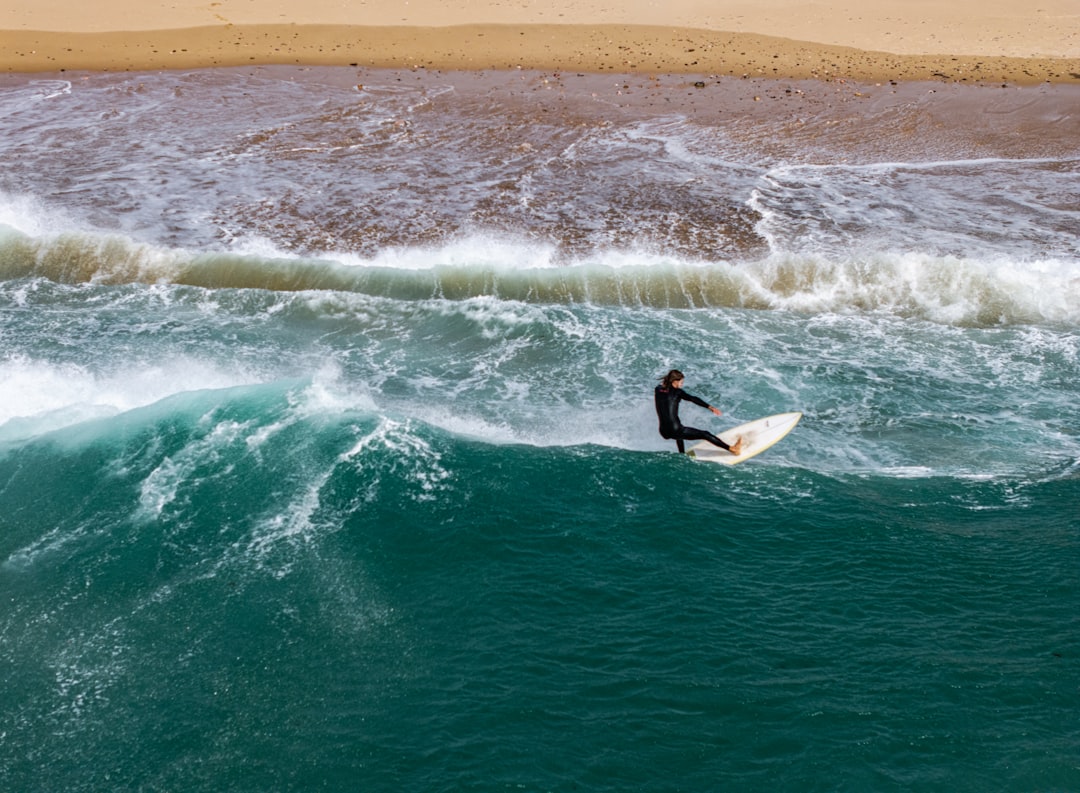
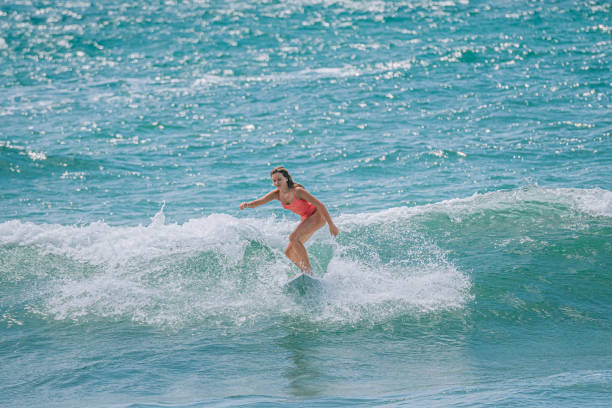
You paddle out on a glassy morning, the horizon clean as a whistle, and you see it peeling off the point with a symmetry that just stops your breath. That wave isn’t just any wave. It’s an A-frame, the holy grail of every dawn patrol session, the kind of swell that makes you forget about your scratchy wetsuit and the cold water trickling down your spine. In the language of surfers, an A-frame is nature’s perfect offering, a peak that throws both left and right with equal grace, like the ocean itself is drawing a perfect triangle against the sky. It is the most stoke-worthy sight a surfer can lay eyes on, the moment you know the day is about to get profoundly good.
When we talk gnarly terms for epic waves, “A-frame” sits right at the top of the lineup. It’s not just a shape; it’s a promise. A promise of a clean, unbroken face that stands up tall before pitching. You see it building, a dark line on the horizon that starts jacking up as it hits a sandbar or reef. The shoulder swings around, the wave begins to feather at the top, and then—wham—the peak stands up like a cathedral. You know instantly which way to paddle. It’s a rare beauty because most waves favor one direction, but an A-frame gives you options. It doesn’t care if you’re a goofy footer or a natural, it offers the same ride on either side. That’s why the old salts in the lineup will sigh with a quiet stoke when they spot one. It means the bank is working, the swell is making a perfect entry, and the crowd is about to be treated to a show.
The technique for riding an A-frame is a whole different vibe from your standard beach break slop. You can’t just flop in. You need to position yourself at the exact apex, the apex, the very top of the peak. Too far inside and you get pounded by the lip. Too far outside and you miss the slot altogether. Once you commit, it’s a drop that goes straight down, like falling off a roof into a barrel. The face is steep, hollow, and you feel a moment of pure weightlessness before you bottom turn and the entire wave opens up in front of you. If you’re surfing a crumbling closeout, you’re just fighting through foam. But on a solid A-frame, you’re dancing on a liquid gem. The whole wave is yours for a second, a clean canvas for a cutback, a floater, or just a straight-up barrel ride if you’re lucky enough to get under the lip.
The culture around an A-frame wave is also unique. The lineup gets rowdy, but there’s a shared respect for the fact that not many swells produce this kind of perfection. You hear the word “peak” shouted more than any other. Guys hoot and holler from the inside. It’s a communal moment. The surfer who catches the wave gets a series of cackles from the shoulder, a digital-sounding “Yeah, buddy!” from a grom on a foamie, or a simple head nod from a gray-beard locals. It’s the ultimate acceptance speech from the ocean, the moment when all the travel, the early mornings, and the flat spells become instantly worth it. You don’t fight for an A-frame, you simply ask for permission to join the dance. And if you take off late, sucking onto the face as the rest of the wave crumbles, you might even hear someone yell “Hang onto your bag!” as you disappear into the pit.
This is the kind of wave that fuels the endless summer. It’s the reason we chase swells around the globe, from the perfect points of Indonesia to the heavy reef passes of the South Pacific. Every surfer has a photo or a memory of that one A-frame they rode at sunset, when the light turned orange and the wave looked like liquid glass. That’s the stoke. That’s why we say gnarly about something truly epic. It’s not just a word. It’s a feeling. And when that peak stands up and offers you both sides, you know you’ve been given a gift. So next time you paddle out and see that clean, symmetrical peak jacking up, remember the lingo. Smile to yourself. Paddle hard. And take off into the perfection of the A-frame.