Surf Lingo Explained: Speak the Language of the Lineup

You paddle out, the salt water’s cool, the horizon’s dotted with your tribe. Then you hear it: “That set was so shacked, but the kook on the inside blew the takeoff and got worked.” Nodding along, you think, “Got it.” But do you? Speaking the local lingo isn’t about being cool; it’s the key to understanding the vibe, the warnings, and the stoke. It’s the unwritten rulebook of the lineup. Let’s break down the essentials so you can talk the talk, not just paddle out.

First up, the cast of characters. A grom or grommet is a young, frothing surfer, all energy and no fear. An old-timer or salt has been around, knows every peak, and has earned their place. Then there’s the kook. This isn’t just a beginner; it’s the surfer whose antics disrupt the flow—paddling right into the peak, ditching their board blindly, or wearing their leash on the wrong ankle. Don’t be a kook. Observe, learn, respect.

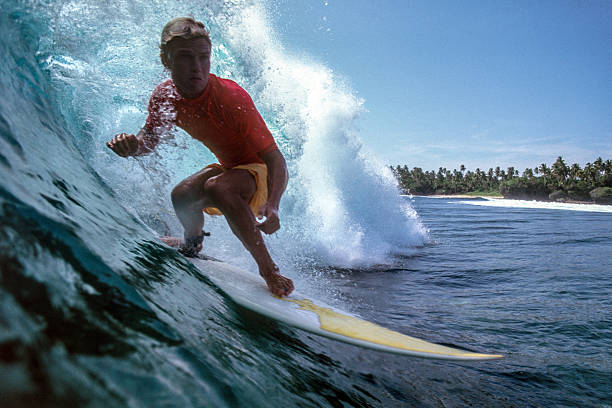
Now, let’s talk about the wave itself. You don’t just catch a wave. You take off on a left (breaking left from the surfer’s perspective) or a right. The peak is where it starts breaking. The lip is the curling, throwing top part. When that lip throws out completely over the wave face, creating a tube or cylinder, that’s the barrel—the holy grail. Getting shacked means you made it inside that barrel. If the wave is hollow and fast, it’s gnarly or heavy. A close-out is when the whole wave breaks at once, offering no rideable shoulder. A set is a group of bigger waves, and the cleanup set is the biggest one that wipes everyone off the inside.

The action has its own vocabulary. Paddling out is your journey through the whitewater. Duck diving is pushing your board underwater to get under a broken wave. Snaking is the cardinal sin—paddling around someone to steal their right of way. When you pop up, you’re getting to your feet. Trimming is riding along the open face, while a bottom turn is that critical first turn at the base to set up the rest of your ride. A cutback is a sweeping turn back toward the breaking part of the wave. If you pull in, you’re committing to the barrel. Getting worked, eaten, or pitched means getting utterly demolished by the wave. We’ve all been there.

Finally, the general vibe. Stoke is the pure, infectious joy of surfing. It’s the fuel. Charging means going hard, taking on the big stuff. If someone’s surfing switch, they’re riding with their opposite foot forward. Dawn patrol is that early morning session before the world wakes up. Goofy foot means right foot forward (left is regular). When the waves are perfect, it’s epic, firing, or pumping. When it’s flat, it’s doldrums. And the dream? A secret spot or going on a surari—that endless chase for perfect, uncrowded waves, living the spirit of The Endless Summer every single day.

So there you have it. This isn’t about memorizing a list; it’s about absorbing a culture. Use these words with respect, listen more than you speak in a new lineup, and let your surfing do most of the talking. Now get out there, score some shacks, and share the stoke. Just don’t snake anyone.
Related Posts

Live Surf Cams

Surfline Live is a 24/7 glimpse into the world’s surf.

This stream moves through Surfline's global camera network, showing spots where it’s daylight and rated Fair or better.

What's The Deal With...?

The Surfing Life

How can I improve my paddling fitness out of the water?

Build that paddle engine! Swimming is number one—focus on freestyle for endurance. Supplement with exercises that mimic the motion: pull-ups, lat pull-downs, and push-ups for that pop-up power. Yoga is fantastic for core strength and flexibility, which is crucial for paddling and maneuvering on the wave. Even simple prone holds (like a plank but on your back) on a stability ball can simulate the paddle position. A strong paddle gets you more waves.

Where are some epic, less-crowded surf destinations?

For an adventure off the beaten track, consider places like Sri Lanka’s east coast, the remote coasts of Peru, or southern Madagascar. Central America still has hidden gems in Nicaragua and El Salvador if you explore beyond the main spots. The secret is often timing: travel in shoulder seasons, dawn patrol, and show respect to the locals. Sometimes the best waves aren’t in the guidebooks but discovered through local stoke and exploration.

How can I give back to my surf community?

Keep it simple. Pick up trash in the car park and beach, even if it’s not yours. Mentor a newer surfer once you’ve got the knowledge. Support local shapers and surf shops instead of always buying online. Participate in or donate to beach clean-ups and conservation efforts. A healthy, clean beach and a supported local economy make for a thriving community for everyone.

Surf Travel Adventures

What’s the best way to pack fins and accessories?

Remove all fins from your boards and pack them in a separate fin bag or case. This protects both the fins and the fin boxes. Stash your leash cords, wax (basecoat and tropical/cold), and a spare leash in there too. A multi-tool or a dedicated fin key goes in your carry-on—you don’t want to land in pumping surf without a way to set up!

What’s the deal with surf camps? Are they budget-friendly?

Surf camps can be a rad value, especially for beginners or solo travelers. The price usually bundles lodging, meals, coaching, and sometimes transport—simplifying everything. For the independent surfer, they might feel pricey. Do the math: compare the camp cost to arranging everything yourself. Off-season or last-minute deals can make camps a steal. They’re awesome for instant community and local knowledge, which is priceless.

How do offshore winds create those perfect, barreling conditions?

Offshore winds are the magic ingredient, man. They blow from land to sea, holding up the face of the wave as it breaks, making it stand up taller and groom the lip. This creates those hollow, tubing conditions we all dream about. Onshore winds, conversely, blow from the ocean and mush it out. Mornings often have light offshore winds before the daily thermal onshore kicks in. That’s why dawnies are so often flawless.