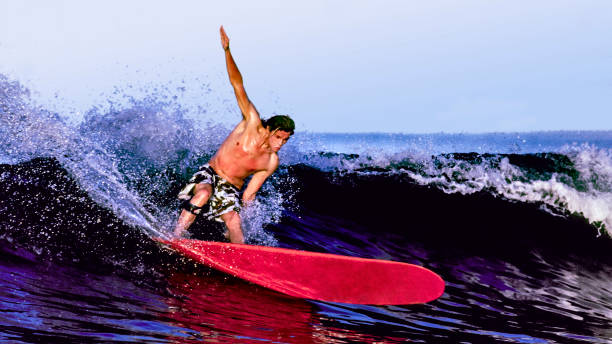
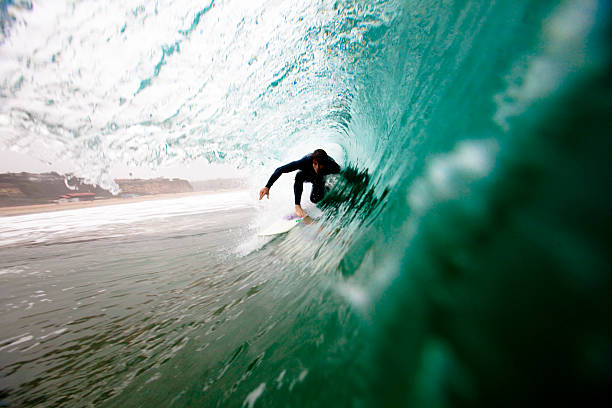
There’s a moment, usually a couple hours into a good swell, when your legs start to hum with that familiar wobble. Your paddle arm feels like it’s been through a cement mixer, and the sun has baked a thin crust of salt onto your board. This is the crossroads. You can either limp in, defeated by a few more sets, or you can reach into your bag and pull out the secret weapon that keeps the stoke alive. And no, it’s not a new epoxy board or a fresh leash. It’s a bruised-up banana, a gnarly hunk of coconut, and a pinch of sea salt that wasn’t scraped off your own skin.
For the traveling surfer chasing waves from the rocky points of Baja to the heavy barrels of Indo, the true quiver isn’t just the boards strapped to the roof. It’s the grub in the cooler. When you’re paddling out for a dawn patrol session on an empty stomach, or trying to squeeze one last wave before the sunset glass-off, what you’ve got sloshing around in your gut matters as much as your drop knee technique. The ocean is a demanding mistress. She takes your energy, your focus, and your liquid. To surf better, surf longer, and surf smarter, you have to stop thinking about food as a chore and start treating it like the primal fuel it is.
The biggest mistake most newbies make is the pre-session feast. They’ll crush a heavy burrito or a greasy burger an hour before the paddle out, thinking they’re loading up the tank. Man, that’s a ticket to the washing machine. Your body has to divert blood flow to your stomach to digest that brick of food, leaving your arms and legs running on fumes. You end up with a stitch in your side, a sluggish paddle, and the distinct feeling that you’re going to see that burrito again in a most unpleasant way. The old salts know that less is more. A handful of dates, a little piece of raw ginger to settle the gut, or a hunk of fresh pineapple to fight inflammation is the way to go. Simple sugars that hit the bloodstream fast, without dragging you down.
But the real game-changer, the thing that separates the shoulder-hoppers from the men and women who can surf a solid five-hour session, is the holy trinity of salt, sugar, and water. When you’re out in the lineup, you are literally leaking the ocean back into the ocean with every bead of sweat. You lose sodium, potassium, and magnesium. If you try to replace that only with plain tap water, you flush out the little electrolytes you have left. That’s when the cramps hit. That’s when the brain fog rolls in and you take a set wave on the head because you’re zoning out. The fix is gritty, simple, and ancient. Mix a big pinch of good sea salt and a squeeze of lime into your water bottle. It’s the original sports drink. It tastes like the ocean, which is fitting, and it keeps your nervous system firing cleanly so you can flow across the face without hesitation.
Post-surf, the story changes. Your muscles are shredded like a wave-ravaged reef. They’re screaming for protein to rebuild and glycogen to restock. This is where the magic of the ocean-side sunset meal comes in. The best post-session meals aren’t about fancy micro-nutrients. They are about whole, salty, satisfying food. A can of sardines on a crusty piece of bread. A bowl of white rice with a fried egg and shoyu. A hunk of grilled fish you just bought off the boat. You need that dense protein to stitch the torn muscle fibers back together, and you need the carbohydrates to replenish the tank for tomorrow’s swell. Feed the machine right, and it will run for you. Feed it junk, and you’ll wake up stiff and slow, watching the good waves from the beach.
Ultimately, this entire surfing lifestyle is a conversation between your body and the sea. You ask the ocean for speed, for flow, for grace. The ocean asks you for stamina, for balance, for awareness. The best way to answer that call is to treat your body like the temple it is. Forget the fake energy gels and the processed convenience store junk. Stick with the real deal. Nuts, seeds, tropical fruit, fresh fish, and good clean water spiked with a taste of the salt that surrounds you. That’s the diet of a surfer who will be stroking into waves well past the age when most folks are just watching them from a towel. The stoke comes from the spirit, but it’s fueled by the stuff you put in your gut. Keep it clean, keep it salty, and keep paddling.