Modern Board Designs: Innovation

Live Surf Cams

Surfline Live is a 24/7 glimpse into the world’s surf.

This stream moves through Surfline’s global camera network, showing spots where it’s daylight and rated Fair or better.

What’s The Deal With…?

Surfboard Evolution

Channels are those deep grooves running from the fins to the tail. They’re all about control in heavy, powerful surf. Think big, chunky waves like Pipeline. The channels act like the fins on an airplane’s wing, directing water flow and reducing side-slip when you’re taking off late or driving through a critical section. They give you extra hold and predictability when you absolutely cannot afford to slip out. You won’t find them on your small-wave board, but on a step-up or a gun, they’re a game-changer.

When it’s small and weak, you need a secret weapon—that’s the groveler. These boards are wider, flatter, and thicker than your standard shortboard, with a fuller nose and a squash or swallow tail. This design gives you maximum paddle power and planing surface to generate speed in mushy surf. They’re not for critical turns; they’re for generating fun where there seems to be none. Think of it as your small-wave cheat code to keep you stoked even on a summer day with knee-high slop.

Rocker is the board’s bottom curve from nose to tail. More rocker helps in steep, hollow waves for tight turns and prevents nose-diving. Less rocker means more speed in flatter sections. Concave is the channel running along the bottom. Single to double concave helps channel water, creating lift and control. It’s like the board’s undercarriage engineering. A flat board with no concave would be a slippery sled, while too much rocker in small waves kills speed. Shapers blend these curves for specific wave types.

Surfboard Evolution

Start with your local waves and what you want to do. For most daily drivers and performance surfing, the thruster (3 fins) is your go-to—balanced and versatile. If you’re chasing speed in hollow waves or want insane drive off the bottom, try a quad (4 fins). It’s fast but can feel tracky. For a loose, retro, soul-carving feel on a smaller or mellow wave, a twin-fin (2 fins) is pure joy, though it can be slidey. Don’t be afraid to swap fins and experiment; your perfect feel is out there.

Dude, it’s been a radical evolution. We went from heavy, single-fin “logs” focused on straight-line trim to short, light, multi-fin rockets. The 70s shortboard revolution was the game-changer—shorter lengths, sharper rails, and lighter materials allowed for insane vertical turns and tube-riding. Modern designs are hyper-specialized: from groveler wide-tails for small waves to high-performance shortboards and tow-in guns for Jaws. It’s all about matching the plank to the wave and your style, allowing way more radical, critical surfing than the old mals ever could.

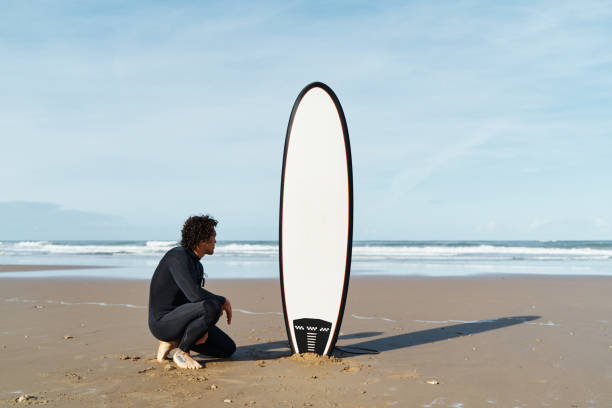
They’re totally legit for certain breaks! The idea is that your frontside and backside turns are fundamentally different. An asym board has a different rail shape, fin setup, or bottom contour on your toe-side versus your heel-side. For a regular footer at a right-hand point break, it can make your backside (facing the wave) more drawn-out and your frontside (back to the wave) more snappy. It’s not an everyday board for everywhere, but for a specific wave you surf all the time, it can unlock a new level of flow.