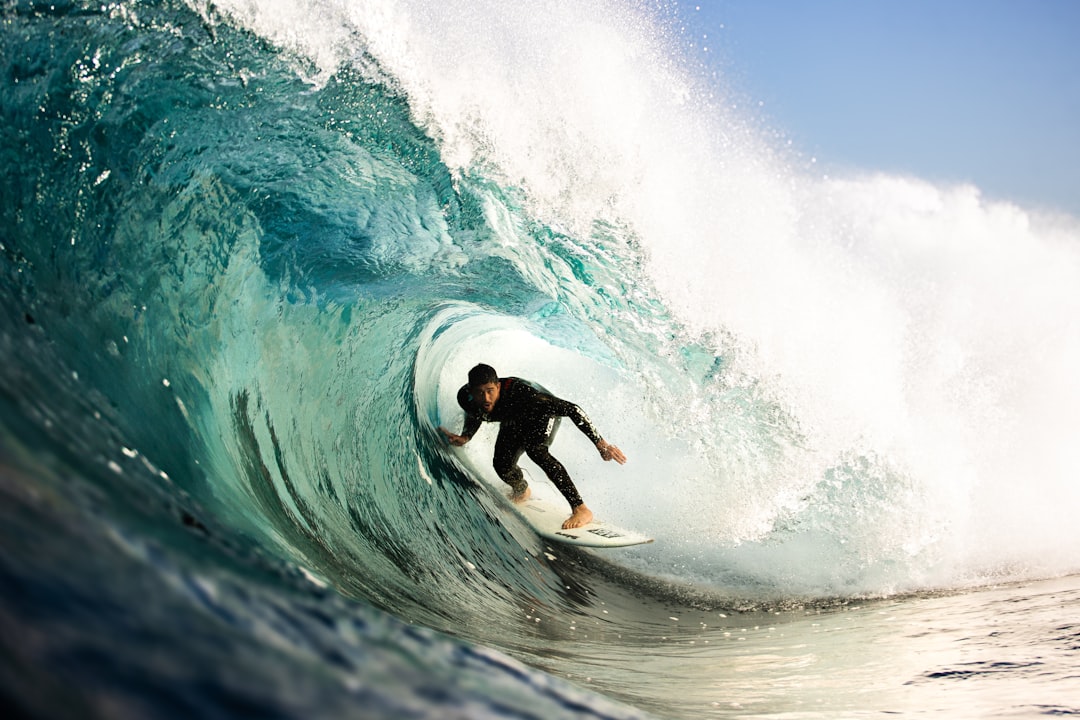
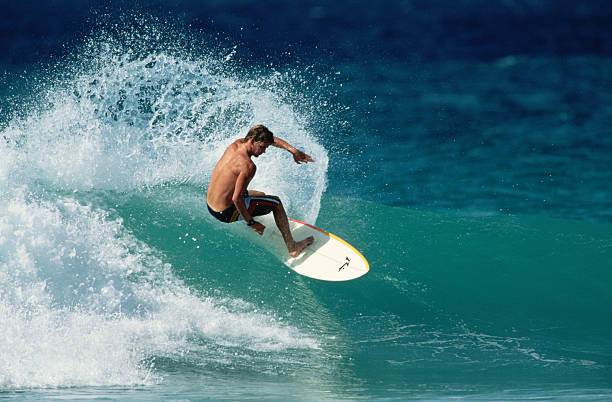
There’s a certain kind of wave pig that doesn’t just surf—he haunts the lineup. Miki Dora was that kind of cat. Born Miklos Sándor Dora in Budapest, he grew up in the warm, golden glow of Malibu, but his soul never really left the shadows. He was the antihero of the surf world, a man who moved through the water like a ghost and through life like a man on the run. If the ocean is a church, Dora was its most cynical, elegant, and utterly untouchable high priest.
Dora didn’t just ride waves; he choreographed them. His style was pure, liquid grace—a kind of backhand, cross-stepping ballet that made the heaviest, most hollow Malibu rights look like they were dancing along to his tune. He rode those long, foam-bottom balsa logs with a lazy swagger, toes hanging over the nose, a cigarette often dangling from his lips between sets. But don’t let the nonchalance fool you. That was his armor. Dora was fiercely territorial. Malibu was his stage, and he had no tolerance for kooks, tourists, or the rising tide of commercialism that started to wash over the surf scene in the late ’50s and early ’60s.
You see, the counterculture was Dora’s religion, long before anyone slapped a label on it. When the surf industry started to churn out boards like hotcakes and magazines started to print pin-up surfer boys, Dora pulled a hard fade. He despised the sellout. He hated the contests, the trophies, the manufactured hype. To him, surfing was a private conversation between a man and the sea, not a spectator sport for the masses. When Greg Noll and others started shaping the big-wave guns, Dora sometimes rode the heavy water, but it was never about glory. It was about the feeling, the cold fear, the salt in the teeth.
His life reads like a beatnik novel written by Hunter S. Thompson. Dora was a master of the hustle. On land, he scammed, borrowed, and sometimes stole to keep his freewheeling lifestyle afloat. He had this knack for disappearing into the ether, sliding out of a tough spot with a mischievous grin and a lie so smooth it sounded like the truth. His famous misadventures—like the time he allegedly ripped off an airline ticket office to fund a surf trip—only added to the myth. He wasn’t a thug. He was a trickster god, a cosmic con man who played by his own rules.
But the ocean was always his real home. He spent years chasing the endless summer, living out of a van or on distant beaches from South Africa to Australia to the remote coastline of Sumatra. He found waves that nobody else knew existed, and he rarely told a soul about them. The perfect wave, for Dora, was a secret. It was a moment of pure, unadulterated solitude. He would rather ride a perfect left all by himself than a perfect right in front of a thousand cheering faces.
Then came the dark turn. In the 1970s, Dora was involved in a series of bad checks and credit card scams that caught up with him. He fled the country, disappearing into Europe and then Australia. He lived on the run for years, a fugitive from the very society he had always scorned. When he was finally caught and served time, the surf world didn’t boo. They kinda just nodded. It fit the narrative. The maverick couldn’t be caged by convention, but the law had its own set of rules. He was released and eventually died of cancer in 2002, far from the California sun that had raised him.
Miki Dora was not a hero in the traditional sense. He was a prickly, flawed, and often dishonest man. But he was authentic to his core. He lived the soul-surfing philosophy with a kind of tragic, unyielding purity. He is the patron saint of the lone wolf, the reminder that the ocean belongs to no one and that the best ride is the one that nobody ever hears about. He remains the ultimate maverick, a ghost forever carving across a perfect, empty wave.