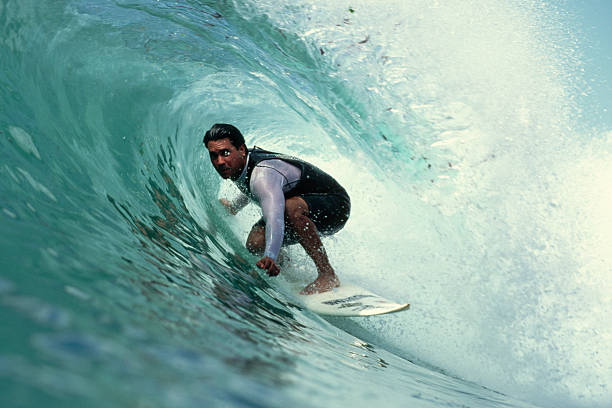
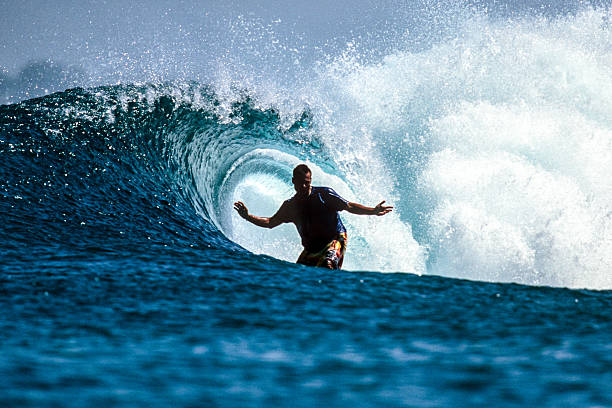
Let’s cut straight to the point. In surfing, before you ever worry about your bottom turn or your cutback, you’ve got to figure out which foot goes forward on the board. This isn’t about being cool or uncool; it’s about your natural stance, the foundation of every move you’ll ever make on a wave. We’re talking about the age-old, saltwater divide: Regular-Foot versus Goofy-Foot.
So, what’s the simple breakdown? A regular-footer rides with their left foot forward. Their right foot is the back foot, the powerhouse that controls speed and drives most turns. A goofy-footer does the exact opposite: right foot forward, left foot back. The term “goofy” has zero to do with ability. Story goes it came from the classic Disney cartoon where Goofy surfed with his right foot forward, and the name just stuck in the lineup. If you’re goofy, you’re in solid company with legends like Gerry Lopez and contemporary powerhouses like Gabriel Medina. Regular-footers? Think Kelly Slater and Stephanie Gilmore. No advantage, just different.
Figuring out your stance is dead simple and has nothing to do with being right or left-handed. It’s about your body’s innate sense of balance. The classic test is the slide test. On a smooth, slippery floor in your socks, take a little run and slide. Which foot naturally goes out in front to lead you? That’s almost certainly your front foot on a surfboard. Another way is to have a friend give you a gentle, unexpected shove from behind. The foot you step out with to catch your balance is the one. Listen to that instinct. Trying to fight your natural stance is a one-way ticket to a kooky, awkward ride and a serious lack of progression.
Now, how does this play out on the wave? It directly shapes the waves you surf and how you surf them. Your front foot points your direction, so your stance dictates whether you are facing the wave or have your back to it on a given ride. On a standard right-hand wave (breaking from left to right as you look from shore), a regular-footer is facing the wave. This is called a frontside wave for them. For a goofy-footer on that same right, the wave is behind them—a backside wave. Flip it to a left, and the situations reverse. Frontside turns generally feel more open and natural, with a better view of the section ahead. Backside surfing can feel more restricted at first, requiring you to look over your shoulder, but it often breeds powerful, torque-driven snaps.
This leads to the classic surf travel dilemma. Goofies get stoked on a left point break, while regular-footers dream of long, peeling right-hand points. A goofy-footer at a place like Jeffreys Bay (a legendary right) will be surfing it backside, which is a different challenge altogether. But here’s the real talk: the best surfers in the world are phenomenal on both their frontside and backside. They turn their supposed “disadvantage” into a strength, mastering the unique power and timing of backside hooks.
At the end of the day, your stance is your stance. You can’t choose it, and you shouldn’t overthink it. Embrace it. Whether you’re regular or goofy, the fundamentals remain the same: eyes on the horizon, bend those knees, and let your body flow with the energy of the wave. The ocean doesn’t care which foot you have forward; it only cares about how you connect with the moving wall of water beneath you. So figure out your natural stance, stick with it, and get out there. Your goofy or regular journey is just beginning.