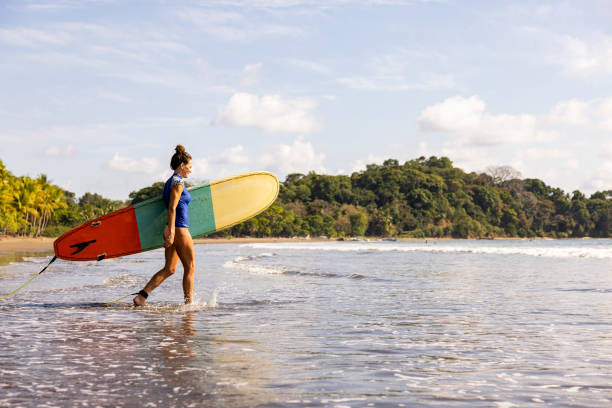
Let’s cut straight to the chase. You’re paddling out, your arms are burning, and you see that next set looming on the horizon, thick and mean. You’ve got two choices: get pummeled, sent backwards with your leash stretched to its limit, or get deep. This is where the duck dive comes in. It’s not just a technique; it’s your passport through the impact zone, the fundamental move that separates the strugglers from the surfers. On a shortboard, it’s everything. Master this, and you master the paddle out.
Forget fancy footwork for a second. Before you can even think about a bottom turn, you need to get to the lineup. The duck dive is the act of submerging yourself and your board beneath an oncoming wave to pass underneath its energy. It sounds simple. It’s not. A bad duck dive will see the wave snatch your board and flip you end over end in a brutal washing machine cycle. A good one is a smooth, sinking feeling, a moment of quiet beneath the chaos before you pop up the other side, already stroking for the next one.
Here’s the breakdown, the no-nonsense mechanics. As that whitewater or lip approaches, you need timing. Too early and you surface right into the meat of it. Too late and you get nothing but the full force. About a board length away, that’s your moment. Plant your hands firmly on the rails, right near the widest point of your board—your hands should be roughly shoulder-width apart. In one fluid motion, you push down with your arms, using your body weight to sink the nose. Don’t just push the board down; you’re following it. As the nose goes under, kick your back leg up, driving the tail down with your knee or foot on the pad. This is the key. Sinking the nose is only half the job. You must get that tail down to level out the board and get your entire profile beneath the turbulence.
Now you’re submerged. Don’t just hold on. Use one arm—usually your back arm—to pull yourself deeper, almost like you’re grabbing water and pulling the ocean over you. Feel the wave pass overhead. You’ll sense its energy, a rumbling surge, but it shouldn’t grab you. As its force passes, stop pulling down. Your board’s natural buoyancy will want to surface. Guide it up with your hands, get your chest back on the deck, and start paddling immediately. The next wave is probably right behind it. This is about rhythm, about turning a chaotic paddle battle into a series of efficient dives.
Gear matters here. Trying to duck dive a ten-foot log is a joke; you’re doing an Eskimo roll or a turtle roll on those. The duck dive is for shortboards and smaller, thinner hybrids. The less volume you have under your chest, the easier it is to sink. It’s physics, plain and simple. On a bigger day, with more powerful waves, you need a stronger, deeper dive. A weak push won’t get you under the full force of a set wave lip. You gotta commit, get that whole board vertical if you have to.
In the end, the duck dive is about respect. Respect for the ocean’s power, and respect for your own energy. Every wave you duck under cleanly is energy saved for the ride you’re working to get. It’s the silent, gritty work that happens before the glory. It’s not glamorous, but it’s essential. So next session, focus on the dive. Make it smooth, make it deep, and watch how much more time you spend riding waves instead of fighting them. Because getting out the back should be the prelude, not the battle. Now get out there and get under it.