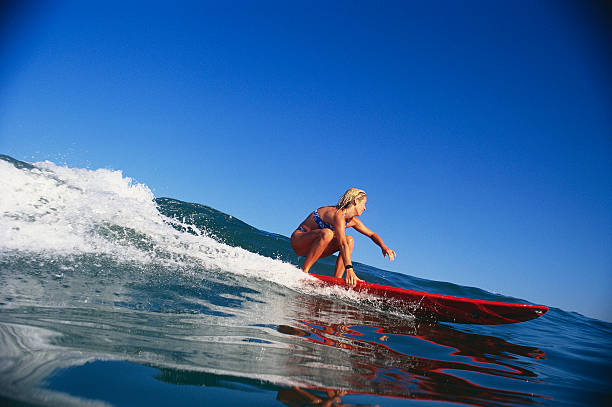
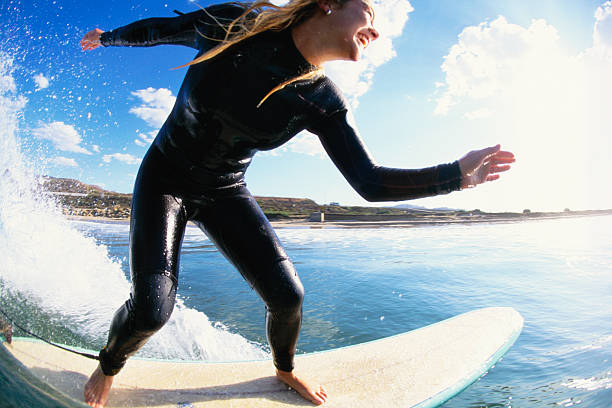
There’s a certain kind of quiet that settles over the lineup before a set rolls in. The lull between swells, when the ocean breathes in and holds its breath. Most surfers are paddling, scanning the horizon, adjusting their boards. But the surf photographer is already still. Floating just behind the peak, weighted down by a housing and a long lens, they’re reading the water like it’s a conversation. The angle of the light, the wind direction, the way the water pulls back before a bomb. It’s a language you don’t learn from a manual. You learn it from sitting out there, set after set, day after day, until the ocean starts to trust you.
Being a surf photographer isn’t about showing up with a nice camera. It’s about knowing when to paddle in and when to hold your position even when the shoulder is closing out. It’s about feeling the pulse of the crowd. You might be sharing a peak with twenty locals on a clean double-overhead morning, and every one of them is hungry. But if you paddle into the pack with the right energy, if you don’t snake waves and you give a nod when someone pulls into a barrel, you become part of the tribe. The lens doesn’t make you invisible. It makes you a witness. And the best surfers know that a good photo can honor a wave better than any story ever told.
There’s a whole different kind of stoke that comes from freezing a moment that nobody else saw. Maybe it’s a split-second where a set wave throws a perfect almond-colored curtain and a surfer disappears, only to emerge with a fist pump. Maybe it’s the look on a grom’s face when they catch their first steep drop. Maybe it’s just the way light hits the back of a glassy face, turning the water into something that doesn’t belong to this world. That’s the magic. The camera catches what the human eye misses, but only if you’re locked in. Only if you’re ready to click the shutter right as the section unloads, right as the spray explodes, right as the surfer makes that one-in-a-million decision to fade bottom and go vertical.
The gear matters, sure. A good housing, a fast autofocus, a fisheye or a 70-200 depending on how close you want to get to the spit. But the real secret is positioning. You have to know the wave. You have to know where the barrel will open and where it will close. You have to anticipate the takeoff zone, the exit, the spot where the lip pitches hardest. That knowledge comes from living in the water. From watching hundreds of waves break on the same reef under different tides, different swells, different moods. The ocean has a rhythm, and a surf photographer learns to dance with it, not against it.
Respect is the currency of the lineup. You don’t paddle straight into the middle of a pack during a bombing south swell and start clicking. You sit on the shoulder, you take the wide angle shots, you wait for a lull. And when you do paddle into the peak for that barrel shot, you make sure you’re not cutting off the surfer inside. You let them know you’re there with a glance, a nod. If you burn them, you lose their trust. And trust is everything in this world. The best photos come when a surfer feels comfortable enough to go all out, to push their limits, knowing that the photographer will capture the moment without getting in the way. It’s a silent exchange, a bond forged in salt and spray.
Some of the most epic shots never make it onto Instagram or into magazines. They’re the ones that sit on a hard drive, forgotten, because the light wasn’t perfect or the wave wasn’t the biggest. But to the photographer, those frames hold a memory. The feeling of a glassy morning when the fog lifted and the crowd was mellow. The laughter after a closeout when a photographer and a surfer both ended up in the rinse cycle together. That’s the heart of surf photography. It’s not about the trophy shot. It’s about the experience. The endless pursuit of a moment that captures the soul of the ocean and the humans who ride it.
So next time you see a photographer floating in the lineup, give them a little respect. They’re not just taking pictures. They’re holding a mirror to the culture, preserving the stoke, the frustration, the beauty, and the raw power of the wave. They’re out there waiting, just like you, for that perfect set. And when it comes, they’ll be ready. Because that’s what we do. We wait. We watch. We chase the endless summer, one frame at a time.