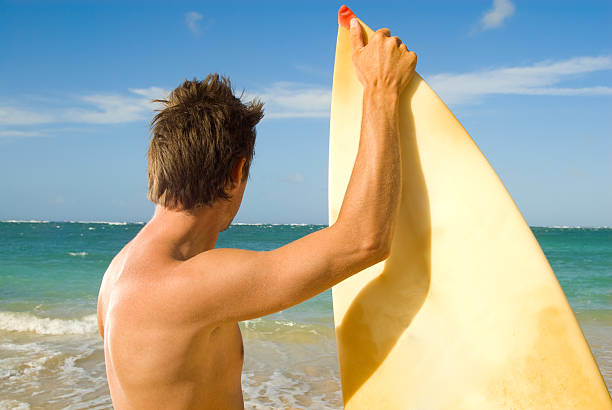
There’s a quiet magic that happens before the sun cracks the horizon over the North Shore of Oahu. The air is cool, the trade winds are sleeping, and the ocean is flat as glass with an oily sheen that catches the first hints of pink and gold. Most folks are still tangled in their sheets, dreaming of waves they’ll never paddle for. But the true watermen, the ones who have saltwater running through their veins, know that the best part of the day is the dawn patrol at Waimea Bay. And it’s not just about the waves, brah. It’s about the ritual, the respect, and the feeling of being part of something bigger than any single set.
Waimea Bay is a place of legend. It’s the big-wave arena where Eddie Aikau proved that a human could ride a 50-foot face and live to tell the tale. It’s the spot where Greg Noll first felt the true power of a Jaws-like swell rolling in from the open ocean. But the dawn patrol at Waimea isn’t about the giant, wave-of-the-winter stuff. The dawn patrol is about the shoulder-high days, the manageable swell that comes with the early morning glass-off. It’s about the local crew who have been sitting in that same lineup before the rest of the world even woke up.
The ritual starts before you even touch the sand. You load your stick into the truck while the stars are still out. You check the buoys and the wind reports on your phone with one eye open, then you listen to the sound of the ocean from the highway. Can you hear it? The low rumble of Waimea waking up. It’s a sound that grounds you, reminds you that the ocean doesn’t care about your plans or your problems. It’s just there, waiting, patient as a stone.
When you finally park and walk down to the beach, the lineup is sparse. Maybe a handful of guys, all locals, all nodding to each other with that silent respect that only a shared stoke can bring. Nobody is hooting or hollering. Nobody is dropping in on each other. The vibe is pure, clean, and charged with aloha. It’s a far cry from the chaotic zoo that Waimea becomes by mid-morning when the tour buses and the camera crews show up. The dawn patrol is a sacred time, a secret that the locals keep close to their chest.
You paddle out through the channel, feeling the tug of the current and the cool water sliding over your skin. The first set of the morning rolls in, maybe head-high, maybe a bit overhead. You stroke into one, feel the drop, and make a bottom turn that sends a spray of water into the purpling sky. For a few seconds, everything is clear. There’s no traffic, no rent, no drama. Just you, the wave, and the dawn.
And that’s the real beauty of the dawn patrol at Waimea Bay. It’s not about the bragging rights or the Instagram clips. It’s about the simple, endless stoke of being in the water when nobody else is. It’s about the sunrise that paints the bay in shades of orange and blue, a show that no human can replicate. It’s about the feeling of paddling back out after a wave, catching your breath, and knowing that you’re exactly where you’re supposed to be.
The Dawn Patrol at Waimea Bay is the heartbeat of Hawaiian surfing culture. It’s where the old-school vibe meets the modern-day chase for perfection. It’s a reminder that the best waves are not always the biggest ones. Sometimes, the best wave is the one you share with the sun.