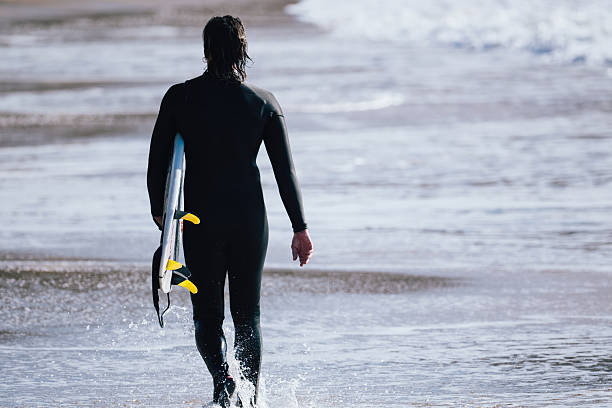
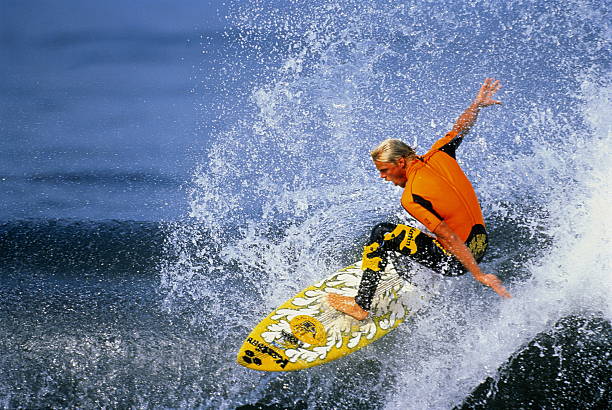
You ever watch a proper surfer on a clean, glassed off right-hander and wonder how they make it look so effortless? That smooth, coiled rotation from the bottom turn into a vertical snap isn’t just style talking, my friend. That is pure, unadulterated core power in action. We talk about paddling arms and strong legs, but the real engine of a surfer is the trunk. The midsection. The core. It is the connection point between everything your top half does and everything your bottom half wants to do. Without a solid core, you are just a wet noodle flopping around out there, fighting the ocean instead of flowing with it.
Now, when surfers hear the word core, they usually think about sit-ups. Hundreds of them. And sure, a little abdominal work never hurt anybody, but the kind of core strength that will actually make you a better surfer is way more dynamic than that. You need rotational power. You need stability. You need the ability to hold tension in your torso while your arms and legs are doing completely different things. Think about that bottom turn. You drop down the face, compress low, and then you unwind through your hips, your obliques, and your lats to guide that board back up toward the lip. That is a whole-body chain reaction. If your core is weak, that chain breaks. The power leaks out, and you end up sliding out or losing your line.
Building that power starts with understanding the three planes of motion a surfer uses. You need anti-rotation, which is the ability to keep your body still and stable when your arms are paddling hard. You need rotation, for those turns and cutbacks. And you need flexion, for those deep, compressed positions when you are in the barrel or pumping for speed. You cannot just hammer one of those and ignore the others. That is like only waxing the nose of your board and calling it a day. It does not work.
A solid surf fitness routine for core work should feel like you are training for the ocean, not for a gym selfie. Get on the ground and work on some dead bugs. Lie on your back, press your low back into the floor, and slowly extend opposite arm and leg. That anti-rotation stability is exactly what you need when you are paddling out through a nasty shore break and trying to keep your chest up and your board level. Then, get yourself a medicine ball or a light plate and start doing some Russian twists. But do not cheat the motion. Let your hips move. Let your spine twist. That is where the snap comes from. You are teaching your body to generate torque from the core, which is the exact same mechanic that explodes you off the top of a wave.
Then you have to address the obliques and the lower back. You cannot surf well with a weak posterior chain. Woodchoppers are your best friend here. Stand with feet shoulder width apart, grab a cable or a band, and pull it diagonally across your body from low to high. That diagonal plane of movement mimics the carving motion of a cutback. It builds the little stabilizing muscles that keep your spine safe when you are getting rag-dolled in the whitewash. And do not forget the humble plank. A side plank with a hip dip will fire up those lateral muscles that keep you locked in when you are driving down the line.
The payoff for this kind of training is not just in the turns. It is in the paddle battle. A strong core means a stable platform for your arms to pull against. You will get to the peak faster. You will pop up cleaner because your trunk will not be wobbling all over the place. And when a big set rolls through and you have to duck dive deep, that core strength keeps you compressed and tight, letting you slip right through the turbulence instead of getting washed back.
So, next time you are staring at a flat spell and thinking about heading to the gym, remember what you are training for. You are not training to look like a bodybuilder. You are training to be a torpedo in the water, a coiled spring on the face, and a shock absorber in the turbulence. Build that rotational power from the inside out. Your bottom turns will get deeper, your snaps will get vertical, and your stoke will stay high. That is the real surf fitness story.