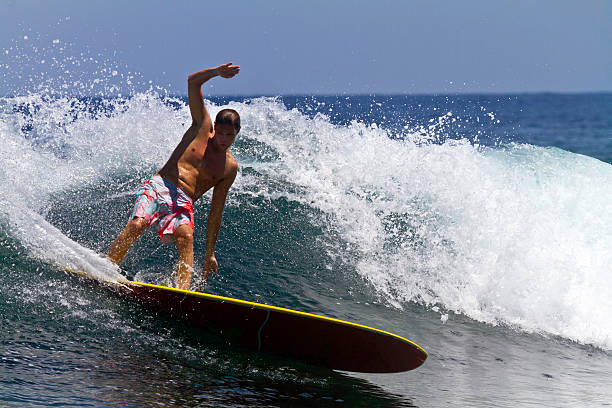
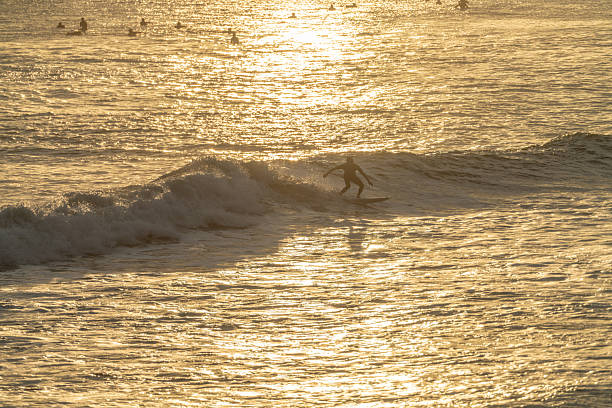
Out there, past the shorebreak and into the pulse of the deep blue, the lineup is a whole different world. It’s a floating auditorium where the ocean writes the setlist and every surfer is both an audience member and a performer. But if you don’t understand the language being spoken, you’re not just missing the conversation. You’re paddling blind. The lingo of the lineup isn’t about showing off or sounding salty. It’s a survival system, a code of respect, and a subtle way of reading the ocean’s mood before you even drop into a wave.
When a surfer hoots or shouts “outside set,” it’s not just noise. It’s a warning that sends a ripple of awareness through every paddling soul. You’ll see heads swivel, bodies shuffle, and boards angle toward the horizon. That phrase is the lineup’s collective deep breath. The same goes for “go left” or “go right.” It sounds simple, but those words are the difference between a clean carve and a cataclysmic collision. In the lineup, communication is often just two words long, but those two words carry the weight of a silent agreement between strangers who suddenly share a very intimate space.
Then there’s the darker poetry of the lineup, words that carry the sting of judgment. Getting called a “kook” is the lowest blow in the water. It’s the ultimate diss, a way of saying you’ve forgotten the basic ethic of respect. You paddle in the wrong channel. You drop in on someone who clearly had the deeper position. You snake a wave that wasn’t yours. A veteran surfer will rarely scream at a kook. Instead, they’ll paddle past with a steady gaze and a single word, “easy,” which means anything but easy. It means you’ve been noticed, and the next wave might not be offered so generously.
But the most beautiful slang in the lineup is less about confrontation and more about a shared reverence for the moment. When someone paddles back out after a long ride and simply says “glassy,” everyone knows exactly what they mean. It’s a word that describes the windless, mirror-like surface of the ocean just after dawn, when the waves look like they were poured from a bottle of polished obsidian. That word is a treasure chest of feeling. It conjures the cool silence between sets, the distant cry of a seabird, the slight trembling in your calves as you wait for the next peak.
The concept of “party wave” also lives in the lineup’s lexicon, and it reveals a lot about the local culture. In some spots, a party wave is a sacred moment where two or three friends share the same face of a wave, weaving around each other like synchronized dolphins. It’s a moment of pure stoke, where ego melts away and the only goal is to laugh and hoot and make it to the shoulder together. At other breaks, uttering “party wave” is like announcing you’re about to mess with the cosmic order. It’s a thin line between camaraderie and chaos, and the lingo tells you exactly which side of that line you’re treading.
And don’t forget the quiet vocabulary of the deep. “Lull” and “set” are the heartbeat of the lineup. When the ocean goes silent and the swells disappear for ten minutes, the water gets tense. Surfers scan the horizon, muttering “it’s just a lull.” That word is a lifeline of hope. But the moment a dark lump rises on the outer bank and someone barks “set wave coming,” the entire lineup falls into a silent, focused trance. The language is no longer about words. It’s about the subtle shift in weight, the angle of the board, the way lungs fill with salt air.
The lingo of the lineup also includes unwritten terms for those who never speak at all. A “wave hog” is the surfer who catches everything, paddling around others, burning every shoulder, leaving scraps for nobody. They don’t need to say a word. Their actions broadcast the term loud and clear. And the “soul surfer” is the one who sits just outside the main pack, silent, patient, smiling, catching one wave every hour but making it count with perfect style. They don’t need to hoot or shout. Their presence in the lineup communicates a dialect of deep respect.
Ultimately, the language you hear out there is a living, breathing thing that shifts with the tide. It’s full of ancient Hawaiian roots like “pau hana” for the end-of-work session, and modern internet-born terms like “grom” for the young shredders. But the core vocabulary never changes. It’s about location, priority, and grace. Understanding the lingo of the lineup is like being given the map to a secret garden. You stop feeling like a visitor and start feeling like part of a tribe. You hear a shout, you know exactly where to look. You feel a lull, you read the words written in the wind. You paddle out, and suddenly the ocean isn’t so vast and lonely. It’s a conversation, and you finally know how to answer.