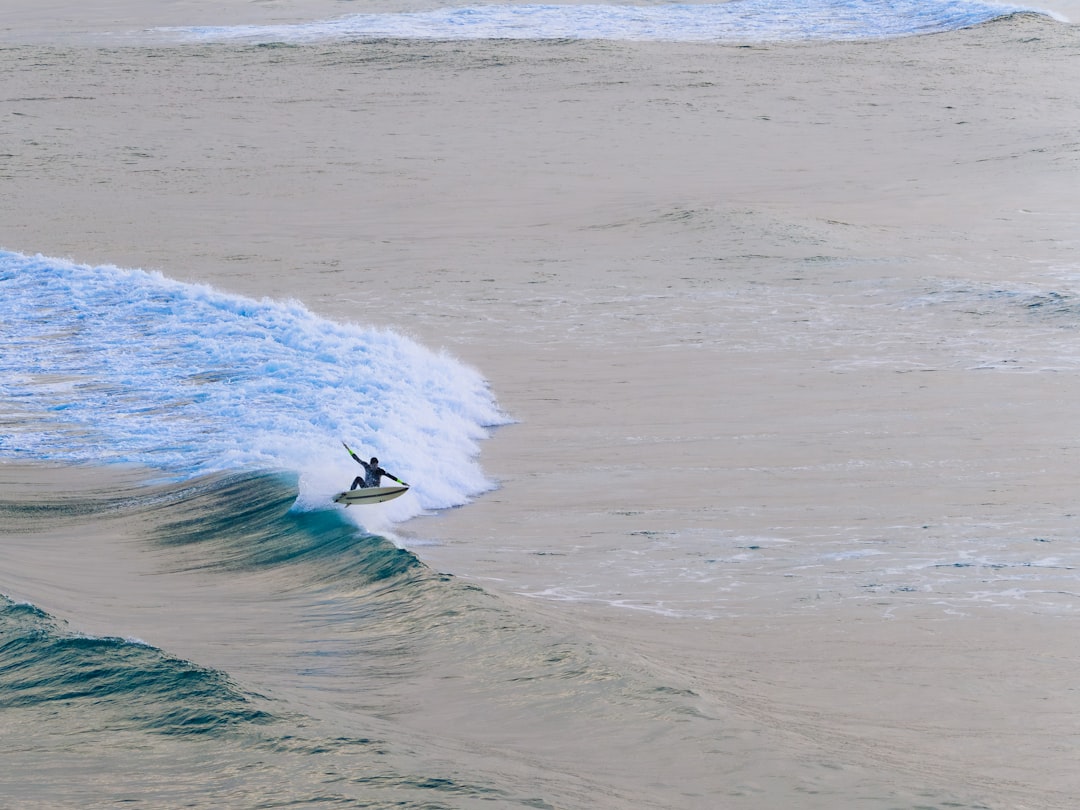
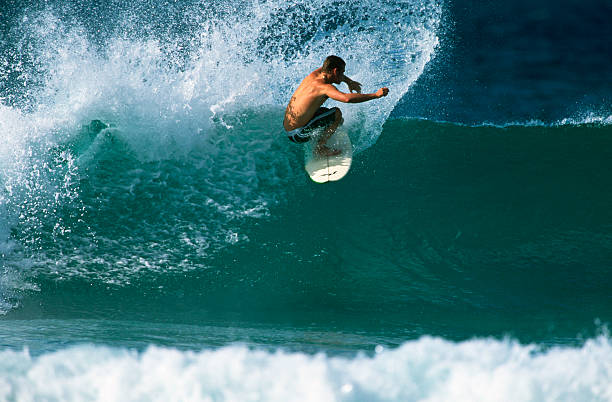
When you paddle out at Makaha on a glassy morning, you can still feel her presence. Not as a ghost, but as a vibe that lingers in the water like the trade winds. Rell Sunn, born in 1950 on the Wai’anae Coast of O’ahu, wasn’t just a surfer. She was the soul of Hawaiian surfing, a trailblazer who rode waves of change with a style so smooth and a heart so big that she became known simply as Queen Rell. For anyone chasing the endless summer, her story is the kind of stoke that never fades.
Rell grew up with sand between her toes and salt in her veins. Her dad was a fisherman, her mom a hula dancer, and the ocean was their backyard. She caught her first wave at four years old on a paipo board, and by her teens she was charging Makaha’s famous high surf alongside the local boys. Back then, women’s surfing was still seen as a sideshow, something cute but not serious. Rell wasn’t having any of that. She entered every contest she could, and her smooth, flowing style – all grace and power – made everyone take notice. She won the Makaha International Championships in 1974 and 1975, and then took the surfing world by storm, winning the Women’s World Surfing Championship in 1977.
But here’s the thing about Rell: she wasn’t just in it for the trophies. She saw surfing as a way to give back, to heal, to connect. She became the first female lifeguard for the City and County of Honolulu in 1976, breaking down barriers on the beach just like she did in the water. She also founded the Rell Sunn Menehune Surf Contest, a kids’ event that still runs today, because she believed every kid deserved to feel the stoke of riding a wave. Her aloha spirit was so real that when she was diagnosed with breast cancer in 1983, she turned it into a platform for awareness and fundraising. She surfed through chemo, paddled out in contests, and kept smiling like the sun itself. Folks called her the “Queen of Makaha” not just for her surfing skills, but for how she made everyone around her feel like royalty.
One of Rell’s most legendary moments came in 1984, when she won the Women’s Pipeline Pro. Pipeline is a beast of a wave, a barreling, grinding leviathan that demands total commitment. To see Rell drop into those glassy green walls, her feet planted on a classic single-fin log, was to witness pure courage. She wasn’t the biggest surfer out there, but her heart was bottomless. She took off on waves that scared grown men, and she made it look as natural as breathing. That win sealed her legacy as one of the most fearless riders of her generation, and it opened the door for the next wave of women who wanted to charge heavy waves, not just cruise knee-high peelers.
Rell’s influence went far beyond contests and barrels. She was a mentor to countless young surfers, especially young women who saw in her a reflection of what they could become. She pushed for fair prize money, for respect in the lineup, and for a culture that valued passion over perfection. She also worked with the Surfrider Foundation and other groups to protect the ocean she loved, because she knew that if the waves died, so did the spirit of surfing. Her commitment to environmental stewardship was as radical as her backside cutback. She taught us that to be a surfer is to be a guardian of the sea, not just a consumer of its waves.
In 1998, after a 15-year battle with cancer, Rell Sunn passed away at the age of 47. But her wave keeps rolling. The Rell Sunn Menehune Contest still draws keiki to Makaha every summer, and her story continues to inspire surfers around the globe. She showed us that you don’t have to be the loudest or the strongest to be a trailblazer. You just have to show up with aloha, give your all, and share the stoke. Rell once said, “The ocean is my church.” And for those who paddle out with a purpose, it still is. So next time you’re sitting in the lineup, waiting for that set, remember the Queen. She’s out there, in every clean wave, in every smile, in every moment of pure, unbroken joy. Hang loose, Rell. Hang loose.