Some legends ride waves. Others become the wave itself, the water, the deep hollow silence at the center of the storm. Gerry Lopez belongs to that second crew. When you talk about the icons of this sport, the names roll off the tongue like a set of clean corduroy – Duke, Kelly, Occy, Carissa. But there’s a particular kind of reverence reserved for the man they call Mr. Pipeline, the silent shaper with the zen-like stare who slid into the blue-green heart of Oahu’s most terrifying wave like he was born with saltwater in his veins. Lopez didn’t just survive Banzai Pipeline. He made love to it. He rode it with a smooth, tucked-in style that looked less like charging and more like flowing, as if the ocean had finally found its favorite son.
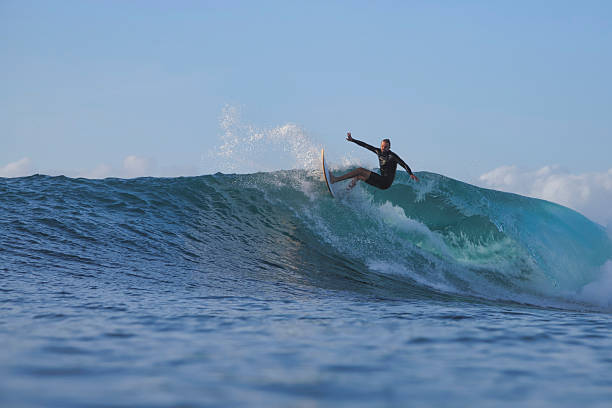
Back in the early seventies, Pipeline was a different beast entirely. No jet skis, no inflatable vests, no safety nets. Just reef, rage, and a drop so vertical it makes your stomach drop just thinking about it. Lopez came from a mixed heritage of Chinese, Japanese, and Portuguese stock, and he grew up on the North Shore when it was still a dusty, rural stretch of dirt roads and simple beach shacks. He shaped his own boards, experimenting with templates that would eventually become the benchmark for heavy-water guns. His relationship with the wave at Ehukai Beach was almost telepathic. While other surfers scratched over the lip, punching through whitewash and hoping to make the section, Lopez would pull into the deepest barrel, knees bent, arms trailing, a calm expression on his face that made it look like he was meditating inside a freight train.
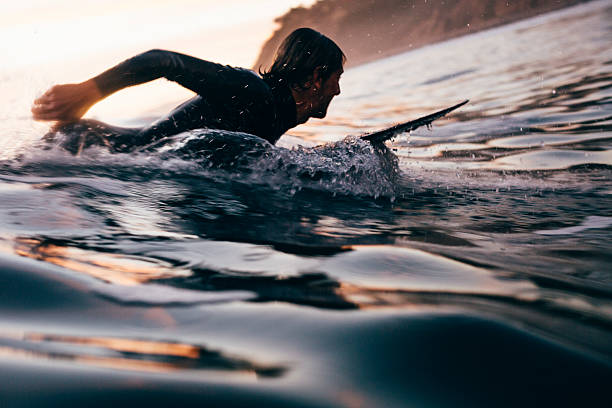
What made Lopez truly legendary wasn’t just prowess. It was attitude. He never cared much for the competitive circus. He entered the Pipe Masters a handful of times, won a couple, but he treated contests like they were just another day on the water. His mind was elsewhere – on the craft, on the technique, on the pure act of threading a swell from top to bottom. He popularized the “tube riding” as an art form at a time when most guys were still trying to make the drop. His board, the legendary Lightning Bolt, was a partnership with Dick Brewer that changed how shapers thought about flex, rail, and rocker. Every glassy morning he’d walk down to the water, paddle out with a piece of wax sewn into his shorts, and disappear into the shadows of the wave for what looked like an eternity. When he finally emerged, spitting water, the whole lineup would just shake their heads. There were no airs, no shakas, no showboating. Just a quiet nod and a paddle back out.
Beyond Pipeline, Lopez became a soul surfer in the truest sense. He travelled to Bali in the late seventies, riding Uluwatu with a crew of groms when it was still a feral jungle headland. He starred in films like “Morning of the Earth” and “Ultimate Wave,” where his smooth style was set to the soundtrack of soft rock and acoustic guitars. But his real influence lay in how he carried himself. He practiced yoga before yoga was cool. He meditated. He shaped boards with a craftsman’s patience. He never chased sponsorships or fame, yet the world chased him. That’s a rare kind of energy. In a sport that often celebrates aggression and machismo, Lopez offered an alternative path – one of humility, balance, and deep respect for the ocean.
As the years rolled on, he moved to Oregon, far away from the tropics, and opened a surfboard factory. He still surfs, though the cold water of the Pacific Northwest is a far cry from the warm, turquoise tubes of Hawaii. But that’s the thing about a soul surfer – it’s not the destination that matters, it’s the ride. Lopez kept charging, kept shaping, kept passing down his wisdom to younger generations. He also became an advocate for healthy living, writing books and giving talks about the connection between surfing and inner peace. In a way, he never left the barrel. He just found a different kind of hollow space – the quiet room inside his own mind.
So when we talk about icons of the sport, let us remember that the biggest legends aren’t always the ones with the loudest voices. Sometimes they’re the ones who speak through their boards, their stance, their quiet grace under impossible pressure. Gerry Lopez is that kind of icon. He took the scariest wave on earth and turned it into a canvas for liquid poetry. He showed us that surfing is not about conquering the ocean, but about surrendering to it. And in that surrender, he found a freedom that few will ever know. That’s the soul of surfing, the endless summer that lives not just in the sun, but in the heart of every grom who’s ever paddled out with dreams bigger than the break itself. Hang loose, Mr. Lopez. The lineup is forever grateful.