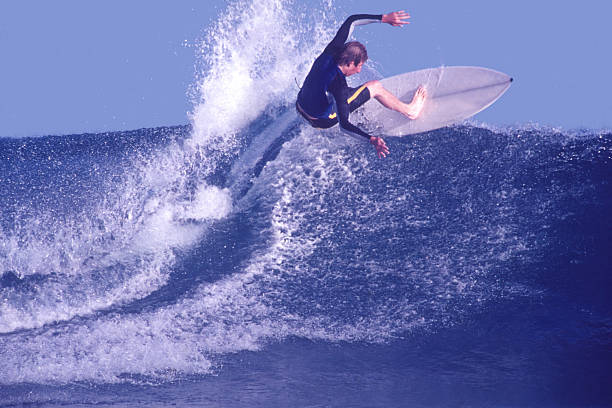
There’s a certain kind of magic that hits you when you paddle out at Malibu for the first time. The sun is low, golden, cutting through the marine layer like butter. The coast curves away from you in a graceful arc, and the swell lines march in from the deep blue, bending around the point like they know exactly where they’re going. For generations, this stretch of sand and reef has been the proving ground for surfers, the cradle of California soul surfing, and the most iconic point break in the world. Everyone who has ever paddled out here feels it. It’s not just a wave. It’s a living museum of stoke, a cold, perfect, ridable piece of history.
The wave at Malibu is a right-hander that peels for hundreds of yards when the conditions line up. It’s a classic point break, meaning the swell wraps around a rocky headland and refracts into a perfectly groomed line that slows down just enough for you to dance across its face. The bottom is mostly sand over cobblestone, with a few patches of reef that keep you honest. There are three main sections: First Point, where the crowd is thick and the vibe is electric; Second Point, where the wave gets a little more walled up and the locals tighten the ranks; and Third Point, or Surfrider Beach, which is as close to a democratized wave as you’ll find on a good south swell. But the soul of the break is First Point. That’s where the longboard crowd lives, gliding in slow motion, cross-stepping from nose to tail like time has no meaning.
The history here runs deep. Malibu was the epicenter of the surf renaissance in the late 1950s and early 60s. This is where the original crew, guys like Miki Dora, Mickey Muñoz, and Lance Carson, pushed surfing from a fringe hobby into a full-blown lifestyle. They rode heavy redwood planks at first, then graduated to balsa and foam. Malibu was the testing ground for the early noseriders, the place where the hang five and hang ten became more than just tricks; they became statements of grace. The wave itself demands a certain finesse. It’s not a barrel. It doesn’t pitch and spit like Pipeline or Teahupo’o. Malibu is a long, open face, smooth as glass, begging you to dance across it. It rewards style over aggression. You can hack it to pieces if you want, but the real stoke comes from flowing with it, trimming high, letting the wave carry you into the cove.
Today, the lineup is a mix of old souls and new blood. Dawn patrol is sacred. Before the tourists and the rental boards show up, the water belongs to the locals, the guys who have been out there since the 70s, the ones who know every bump and divot in the reef. The etiquette is strict. Respect the pecking order. Don’t paddle inside a guy who has been waiting twenty minutes for a set. Don’t snake your way into a wave that isn’t yours. Malibu is a wave for everyone, but it demands humility. The paddle out can be humbling. The current pulls south, the inside section breaks shallow, and sometimes you feel like you’re swimming in place. But when you finally get into position and a clean south swell rolls in, all that work dissolves. You take off deep, drop down the face, and then the world opens up.
The culture here is inseparable from the wave itself. Malibu isn’t just a spot; it’s a mindset. It’s the longboard comeback, the golden age of surf films, the endless summer that Bruce Brown captured so well. The houses on the hill, the parched chaparral, the smell of salt and eucalyptus, it all feeds the stoke. When you paddle in at sunset, legs shaky, fins caked with sand, you understand why so many have chased this wave. It’s not about aggression. It’s about flow. It’s about being in the right place at the right time, and letting the ocean show you what it can do. Malibu remains the classic. It’s the first wave that taught us what a point break could be, and it’s still teaching every single day.