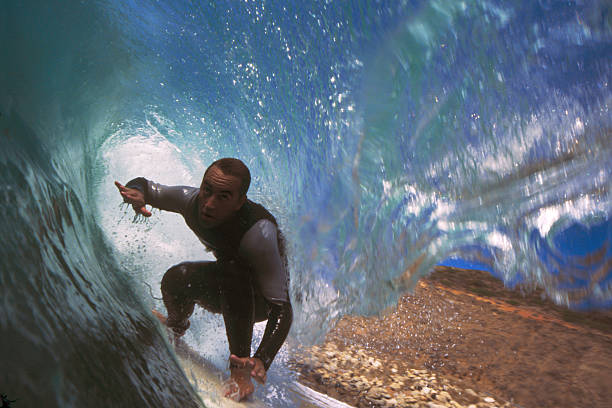
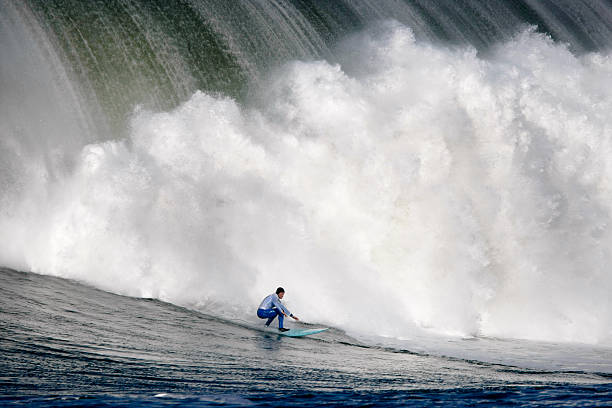
There are waves, and then there are waves that rearrange your DNA. Supertubes at Jeffreys Bay is the latter. You know it the moment you paddle out through the low-lying channel, the Indian Ocean breathing a lazy but powerful swell, the horizon lined with sets that look like they were drawn by some cosmic hand. The water is cool but not cold, and there’s a hint of fynbos in the offshore wind that grooms the face to a glassy, mercury-like sheen. For a surfer, this isn’t just a beach break or a reef pass. This is a cathedral carved from sand, rock, and pure oceanic intention.
The wave itself is a masterclass in patience and violence. It starts a few hundred meters up the point at a spot called Boneyards, then wraps through a series of sections that each have their own personality. There’s the long, rippable canvas of “The Point” where you can carve high, low, and beyond. Then the reef comes alive, the water suddenly pulls, and the famous “Super Tubes” section reels over an infamous slab. That’s where the camera lenses cling, where the barrels spit with a fury that makes your heart skip even from the channel. Farther down, “Impossibles” and “The Whale” add their own frothing madness. But the whole journey is one single, glorious right-hand gift that can stretch for over three hundred meters—if you’ve got the legs, the lung capacity, and the zen to hold your line.
The history here sits heavy in the water. This is where the art of the carve was reborn in the 1970s, where the world’s best came to unlock the code of the long, steep, high-performance point. Guys like Mike Barry and Robert Botha first showed that a wave could be both a skatepark and a freight train. Then the international circus arrived—Mark Richards, Cheyne Horan, and later Kelly Slater and the modern rippers—each generation adding a new chapter to the Supertubes bible. When the contest rolls around, the WSL crew turns this sleepy South African town into a vortex of stoke. But for the rest of the year, the lineup is a shared secret among locals and traveling souls who’ve made the pilgrimage. You want to catch it on a mid-week morning, when the dawn light paints the clouds pink and the only sounds are the hiss of the lip and the cackles of a seal sunning on the point.
The vibe in the water is a mix of serious respect and easygoing camaraderie. Locals have earned their spot, and they’ll let you know if you snake a wave. But if you’re humble, if you’re smiling, if you’ll take a late takeoff with grace, they’ll give you a nod. Surfing Supertubes is a privilege, and the lineup enforces a kind of unspoken etiquette. You wait your turn, you hoot when someone gets barreled, and you paddle back out with a grin that says, “Yep, that just happened.“ That’s the essence of the culture here—not aggression, but shared reverence for a wave that demands your absolute best. The sun beats down warm, the water swirls with a kaleidoscope of blues, and for an hour or an entire session, you’re not just surfing; you’re dancing with a living force.
There’s a spiritual dimension too, the kind that the endless summer chase is really about. When you sit in the channel watching the sets roll through, you realize Supertubes isn’t owned by any contest or country. It’s a transient miracle, shaped by a perfect storm of ocean floor and swell direction, a moment in space that’s been repeating for thousands of years and will keep repeating long after our boards have turned to dust. You feel small and huge at the same time. The salt on your skin, the burn in your legs, the utter purity of a well-timed drop into a perfect barrel—it all adds up to a state of grace. For a few seconds, you’re riding inside the rhythm of the planet itself, and no phone, no stress, no deadline can follow you there.
Jeffreys Bay is more than a spot on the map. It’s a reminder that the ocean still holds places that humble the ego and feed the soul. If you ever get the chance, point your vehicle south toward the Cape, park near the point, and watch the sets roll in with a cup of coffee in your hand. Then paddle out, paddle deep, and let the Super take you where it wants. Chances are you’ll come back a different surfer, with a new story to tell and a permanent groove in your memory.