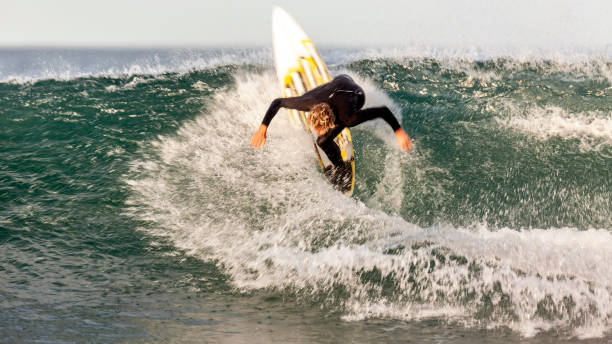
There is no feeling in the world quite like the moment the wave swallows you whole. The world goes quiet, the roar of the ocean becomes a distant hum, and for a brief, timeless instant you are suspended in a cathedral of moving water. The bottom drops away, the lip throws over your head, and suddenly you are not riding the wave—you are inside it. This is the barrel, the tube, the green room. It is the pinnacle of surfing, the reason any of us paddle out on a stormy day, and the one thing that keeps the fire burning even when the wind is onshore and the swell is flat.
To get barreled, you must understand the compression. It is not just about being in the right place at the right time. It is about reading the wave from the moment it stands up, feeling the energy of the water, and knowing exactly where the pocket will collapse. The compression is the zone where the wave arches over the most. It is the deepest part of the tube, the place where the lip connects with the trough and the foam ball builds up like a freight train. If you want to survive inside that thing, you have to get comfortable with the pressure. You have to learn to breathe slow, keep your eyes open, and trust that the wave will give you a way out.
When you first start trying to get tubed, everything feels rushed. The wave heaves up and you take off, but before you know it the lip is already throwing over your shoulder and you are staring at a wall of whitewater. The key is to stay deep. You want to be as close to the pitching lip as possible without getting caught in the falling curtain. That sweet spot is called the pocket, and it is where the wave has the most power. If you are too high on the face, you get pitched. Too low, and you slide right out the back. The barrel is a balance of speed, angle, and commitment. You have to set your rail early, keep your weight centered, and look toward the exit before the wave even starts to throw.
Once you are inside, the world changes. The light turns a muted, eerie green. The sound of the ocean becomes a low roar punctuated by the crack of the lip hitting the water behind you. You can feel the pressure of the water on your back, a steady hand pushing you forward. Some barrels are tight, like a shoebox. Others are massive, with enough room to stand tall and take a breath. No matter the size, the rule is always the same: stay calm. Panic is what gets people washed. If you start flailing, you lose your line, your board slides out from under you, and the wave eats you up. The best barrel riders make it look easy because they are relaxed. They drop into the deepest part of the compression, touch their back hand to the wall of water, and wait for the exit to open up.
Reading the exit is just as important as getting in. You do not want to just blast out into the flats and lose all your speed. You want to feel when the wave lets up, when the lip softens and the pressure on your back releases. That is your moment. You shift your weight forward, give a couple of quick pumps, and let the wave spit you out. When you emerge from the tube, the world explodes back into light and sound. The sun hits your face, the spray flies off your board, and for a few seconds you are flying over the open face of the wave, free and clear.
But the deepest barrels are not about the exit. They are about the time spent inside. The long, dark, quiet moments when you are completely hidden from the world. That is where the magic lives. That is the endless summer, the chase for the sun, the reason we keep coming back to the ocean day after day. When you are in the tube, nothing else exists. No work, no worry, no anything. Just you and the wave and the beautiful, terrifying compression that holds you in its grip.