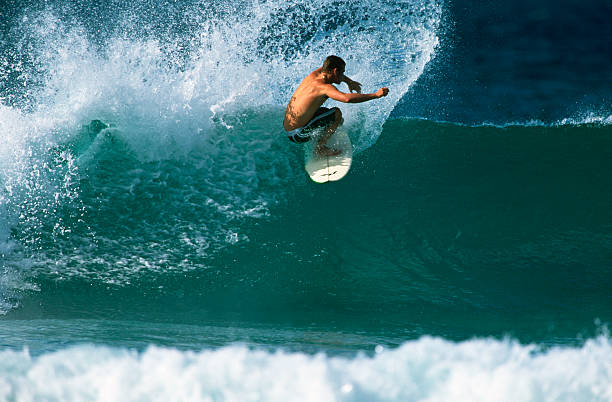
When you paddle into a set wave that’s standing up like a wall of water and you feel that familiar drop in your stomach, you’re not just surfing. You’re setting up the single most important maneuver in the entire sport: the bottom turn. This isn’t about standing there like a statue while the wave does all the work. This is about loading up every ounce of energy the ocean is giving you, squeezing it through your rail, and unleashing it in a way that makes the crowd hoot and your buddies shake their heads in stoke. This is shredding with power.
A lot of guys think shredding is just about going fast or doing the biggest air. That’s a part of the show, sure, but the real essence of riding with power lives in the bottom turn. It’s the foundation. It’s where you take all that momentum from the drop and transition it into a furious, arcing climb up the face. If you blow the bottom turn, you’re dead in the water. You’ll be drifting into the flats, fighting for scraps, looking like a kook just trying to survive. But if you nail it, if you dig that rail in deep and feel the fins hook into the water like claws, you set yourself up for a section that is yours to destroy.
Think about it like this. When you see guys like Kelly Slater or John John Florence doing a carve that throws a sheet of whitewater ten feet sideways, that didn’t start at the top of the wave. It started at the bottom. They approach that trough with a compressed, coiled stance. Knees bent deep, weight forcing down through the back foot, head looking straight up the face at the section they want to attack. They are patient. They let the wave’s momentum carry them through the turn rather than forcing it. If you try to spin a top turn too quickly without a solid bottom turn, you’ll just lose all your drive and stall out. The power comes from that compression, from the spring-loaded feeling in your legs. You are literally winding up the clock, and the snap at the top is the bell ringing.
The real secret to riding with power is where you place your body in relation to the pocket. In the bottom turn, you’re not just turning at the bottom. You are using the wave’s steepest part, the most critical section, as your launch pad. You want to project your energy up and out, not just spin in a circle. This is where the term shredding really comes alive. When you finish that turn and come ripping out of the trough, your board should be humming, the fins buzzing with vibration. You should feel a g-force trying to pull you off the board. That’s the power. That’s the ocean trying to shake you loose. The best surfers resist it, staying low and tight against the wave, using their inside arm to carve a deep trench in the water.
One common mistake is surfing too far in front of the wave. If you’re rushing ahead of the foam ball, you never get that deep hook into the power source. You can’t shred the lip if you never let the wave hit your fins. Riding with power means sacrificing a little bit of your line. It means letting the wave almost swallow you up before you make your move. You have to trust that bottom turn to pull you back into the pocket and slingshot you into the next maneuver. That’s the endless cycle of a power surfer: drop, bottom turn, snap, drop back down, bottom turn again. Each one builds on the last, feeding off the speed you generate.
In the end, all those fancy terms you hear on the beach—hacking, cracking, gouging, driving—they all trace back to this single, fundamental action. If you want to shred, you have to learn to love the bottom turn. You have to find the sweet spot where the wave is moving fastest, drop your weight, and listen to the sound of your rail digging into the water like a knife through butter. That is the language of power. That is how you go from just riding a wave to absolutely owning it. So next time you paddle out, don’t just try to launch into the sky before you’ve earned it. Compress. Wait. Let the wave give you its energy, and then give it right back, harder and faster. That’s shredding.