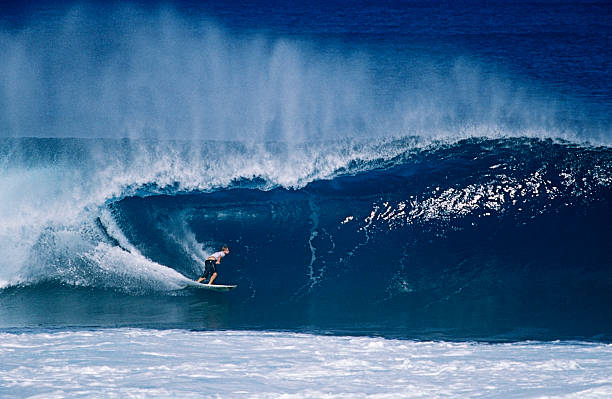
There is a specific kind of quiet that falls over a lineup before a big set rolls in. It is a moment of pure anticipation, where every surfer knows the wave is coming, but nobody knows exactly what it will do. Bethany Hamilton knows that quiet better than most. She has felt it in the water a thousand times, but none of those moments carried the weight of her first serious competition after the shark attack. That morning, the ocean did not care about her story. It was testing her, wave by wave, just like it tests every soul who paddles out. And she answered it without hesitation, proving that the real measure of a surfer is not how hard you fall, but how stoked you are to get back up and chase another set.
The attack on Halloween morning in 2003 changed everything for a thirteen-year-old girl who had already spent her life dreaming of surfing Pipeline. Losing an arm is not just a physical adjustment. It is a total reimagining of what is possible. The pop-up changes. Paddling into a wave becomes a balancing act of timing and leverage that most two-armed surfers never have to think about. Duck diving a set becomes a whole different kind of gamble. Many people whispered that her career was over, that she would never compete again, that the competitive circuit was too unforgiving for a one-armed surfer. But those people were not looking at the wave right in front of them. They were looking at the wreckage behind her.
Bethany’s return to competition was not a sentimental journey. It was a gritty, gnarly, day-by-day grind that started in the warm water of Kauai and carried her all the way to the world stage. She did not come back to make a statement. She came back because she loved surfing more than she feared the ocean. Her first competitive heat back was a blur of adrenaline and pure instinct. She paddled into waves with a ferocity that surprised even the lifeguards watching from the beach. She took off on sections that would have given most surfers pause, and she rode them with a style that was entirely her own. The judges did not give her points for inspiration. They gave her points because she was charging hard and pulling into waves that deserved respect.
What makes Bethany Hamilton a true icon of the surfing world is not the tragedy she survived, but the way she reshaped her life around that loss without letting it define her. She did not become a surfer who happens to have one arm. She became a surfer who happens to rip, and she happens to have one arm. That is a subtle but powerful difference. The media loves a comeback story, and for good reason. But Bethany never played the victim. She never asked for an asterisk next to her name. She wanted to be judged on the same waves, the same conditions, and the same criteria as everyone else in the lineup. And she earned that respect not through words, but through action. Every time she dropped into a steep face, every time she committed to a bottom turn that required perfect timing, she was rewriting the definition of what a competitive surfer can be.
Her spirit is not about overcoming adversity in a grand, dramatic sense. It is about the small, daily choices that add up to a life fully lived. It is about paddling back out after a wave closes out on your head. It is about the patience to wait for the right set when your body is tired and your arm is aching. It is about the joy of being in the ocean, which is the same joy that every surfer who has ever felt a glassy morning knows in their bones. Bethany Hamilton surfed against the best women in the world because she belonged in that water. She did not need to be a hero. She just needed to be a surfer. And that, in the end, is the most heroic thing any of us can do.