In the pantheon of surfing legends, few names carry the weight and reverence of Eddie Aikau. His story isn’t just about riding giant waves; it’s about character, courage, and a deep, abiding connection to the ocean that defined an entire era of Hawaiian surfing. To talk about Eddie is to talk about the soul of big wave riding.
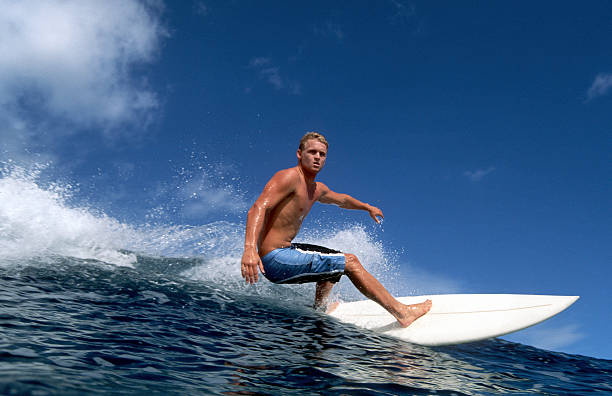
Eddie came up in the golden age of Waimea Bay. Before tow-ins and jet-skis, when catching a mountain of water was a pure test of paddle power, instinct, and guts. The North Shore in the 60s and 70s was the proving ground, and Eddie was its most steadfast guardian. He wasn’t just a surfer; he was a true waterman, steeped in the ways of the sea. While others watched from the cliff, Eddie would paddle out when the Bay was maxing out, a lone figure against a liquid horizon. His signature drop-knee stance, carved into the face of waves that would make most mortals weak in the knees, became the iconic image of fearless commitment. He won the Duke Kahanamoku Invitational in 1977, but trophies weren’t his thing. Respect was.
What truly set Eddie apart, what cemented his legend beyond the lineup, was his day job. He was the first lifeguard ever hired by the City and County of Honolulu to watch over the North Shore’s treacherous stretches. Stationed at Waimea, he performed over 500 rescues without ever losing a single life. Not one. In an era before leashes were common, when a broken board meant a brutal swim through impact zones, surfers knew that if they were in trouble, Eddie would come for them. That unwavering sense of duty, that kuleana (responsibility), was his core. He wasn’t a hero because he surfed giants; he surfed giants because he was a hero, with a heart as big as the swells he chased.
The final chapter of his story is where the legend meets the deep mythos of the sea. In 1978, Eddie joined the crew of the Hōkūleʻa, a traditional Polynesian voyaging canoe attempting the historic journey from Hawaiʻi to Tahiti. The canoe capsized in the monstrous channels beyond Molokaʻi. As the situation grew desperate, Eddie made the ultimate waterman’s decision. He paddled for help on his surfboard, aiming for Lānaʻi, nearly 20 miles away. He was never seen again. The rest of the crew was saved, but the ocean had claimed its most loyal son. His disappearance sent shockwaves through Hawaiʻi and the global surf community. It felt like a force of nature had been extinguished.
Eddie’s legacy is etched into surfing’s DNA. The phrase “Eddie Would Go” is more than a bumper sticker; it’s a code. It speaks to stepping up when things get heavy, in the water and in life. It’s about having the courage to commit when others hesitate. The big wave contest in his honor at Waimea Bay—“The Eddie”—only runs when the surf is a perfect, massive, and terrifying 20-foot Hawaiian (meaning faces of 40 feet or more). It’s the most exclusive contest on the planet because the ocean itself decides the schedule, a fitting tribute to a man who listened to the sea above all else.
So, when you look out at a heaving Waimea or any charging lineup, remember the guy who paddled out with more than just skill. He paddled out with aloha for the ocean and for the people in it. Eddie Aikau was the ultimate waterman, a lifeguard who became a legend, and a surfer whose spirit still rides every big wave that rolls onto the North Shore. That’s not just history; that’s surfing’s heart.