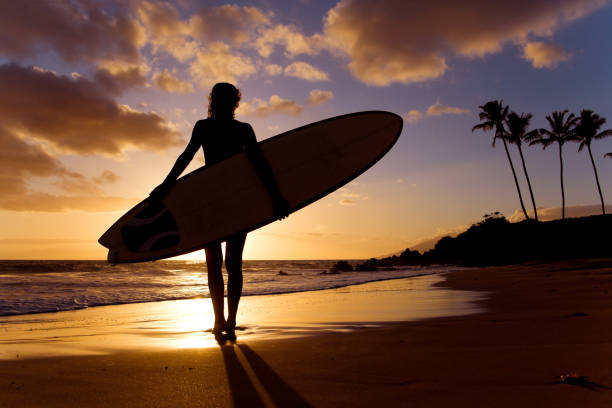
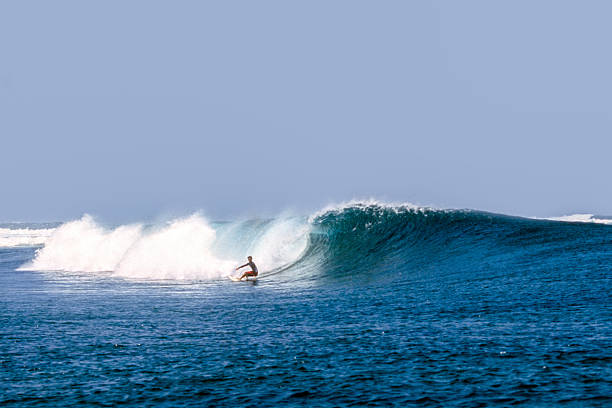
You’re paddling out, the sun on your back, salt on your lips, waiting for that next set. That feeling, that global stoke, didn’t just appear. It was carried ashore on the massive shoulders of one man: Duke Paoa Kahinu Mokoe Hulikohola Kahanamoku. Forget just a surfer; the Duke was the original waterman, an Olympic legend, and the undisputed ambassador who planted the seed of surfing across the world. To understand our modern lineup, you gotta know the Duke.
Born in Honolulu in 1890, the ocean was his backyard. He learned to ride waves on traditional olo and alaia boards, massive slabs of wood that required pure strength and grace. While others were catching small inshore waves, Duke was charging the big stuff at Waikiki and beyond, pioneering a powerful, elegant style that was all about riding with the wave, not just on it. His natural athleticism was insane. This dude wasn’t just a surfer; he was a human fish. He used his swimming power, winning five Olympic medals in swimming for the USA, shattering world records with a kick so powerful they thought he had flippers hidden on his feet.
But here’s the crucial part: wherever he went for competitions, he brought surfing with him. He was the original surf explorer, chasing the stoke before it was a thing. In 1914, he gave a mind-blowing demonstration at Sydney’s Freshwater Beach in Australia. The locals had never seen anything like it. He shaped a board from local sugar pine, gave a few groms a push into waves, and just like that, he lit the fuse for Aussie surf culture. Same story in Southern California. While visiting, he put on wave-riding exhibitions at places like Corona del Mar and Huntington Beach. People watched this bronze giant, over six feet tall, glide effortlessly across the water, and they were hooked. He showed the mainland that surfing wasn’t just some exotic oddity; it was the ultimate expression of harmony with the ocean.
Duke’s influence wasn’t just in the water. He was the bridge between the ancient Hawaiian tradition of he‘e nalu (wave sliding) and the 20th century. At a time when the sport had been suppressed in its own homeland, Duke carried its mana, its spirit, with pride. He spoke of surfing as a royal heritage, something sacred and joyful. He also tinkered with gear, helping to transition boards from the heavy, solid koa wood to lighter materials like redwood, making them more manageable and opening the door for more people to give it a go.
His legacy is everywhere. That aloha spirit you feel in a good lineup? Duke embodied it. The idea of the surfer as a strong, respectful waterman? That was his lifestyle. The global spread of surfing from its Hawaiian roots? He was the chief catalyst. He wasn’t out there for fame or sponsors (though he did appear in Hollywood films); he was out there for the pure, simple stoke of riding waves and sharing that feeling.
So next time you’re sitting on your board, watching the horizon, think about the Duke. That long, smooth bottom turn you’re about to set up? His influence is in that rail. The international crew you’re sharing the waves with? He helped build that tribe. Duke Kahanamoku wasn’t just the Father of Modern Surfing; he was the soul of it. A true legend, forever etched into the lineup. Aloha, Duke. Thanks for the waves.